Transforming a “Non-Place” into a Neighborhood Landmark
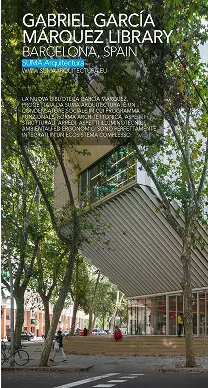
The Gabriel García Márquez Library has become an urban landmark for the Sant Martí de Provençals neighborhood.
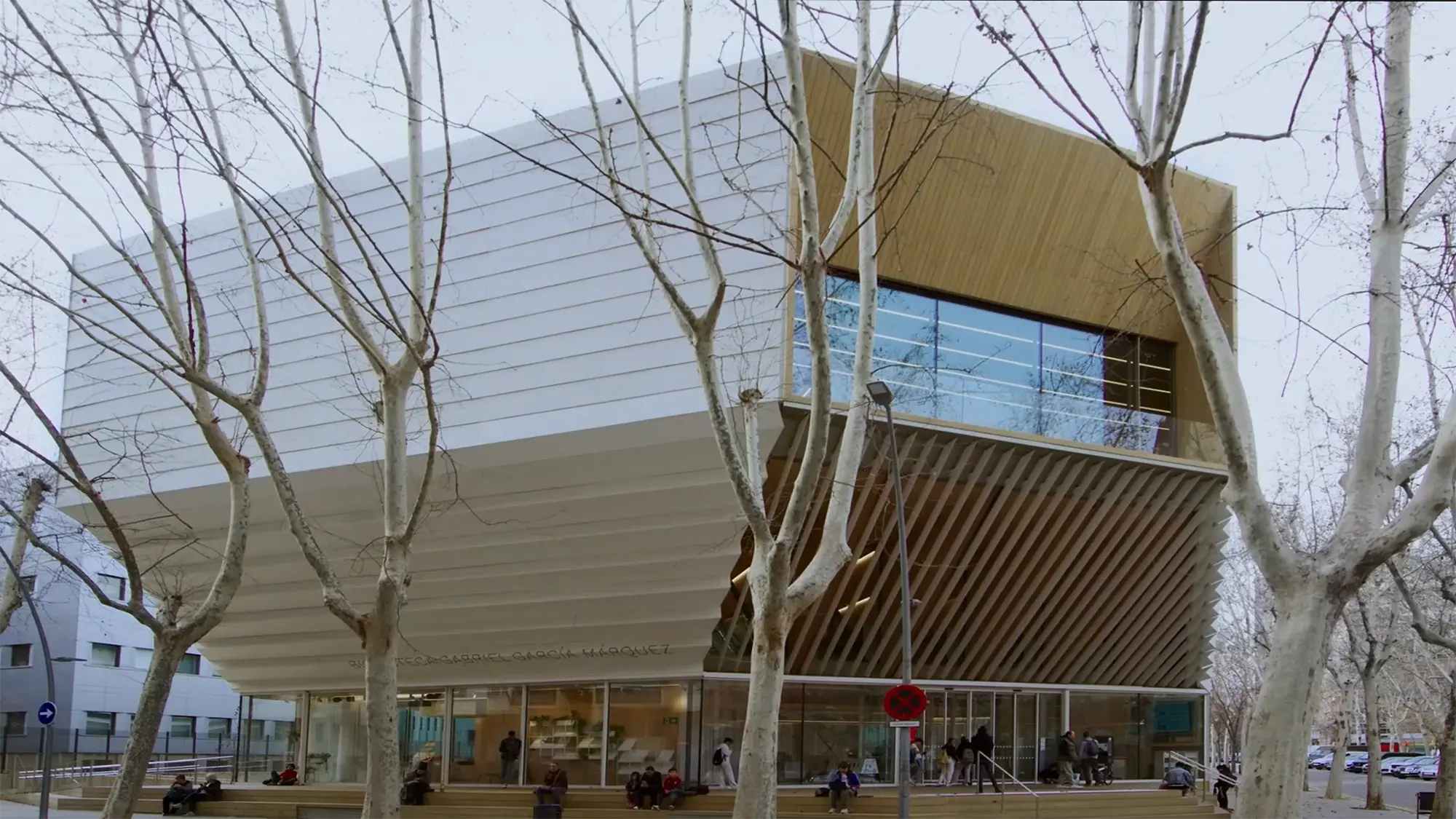
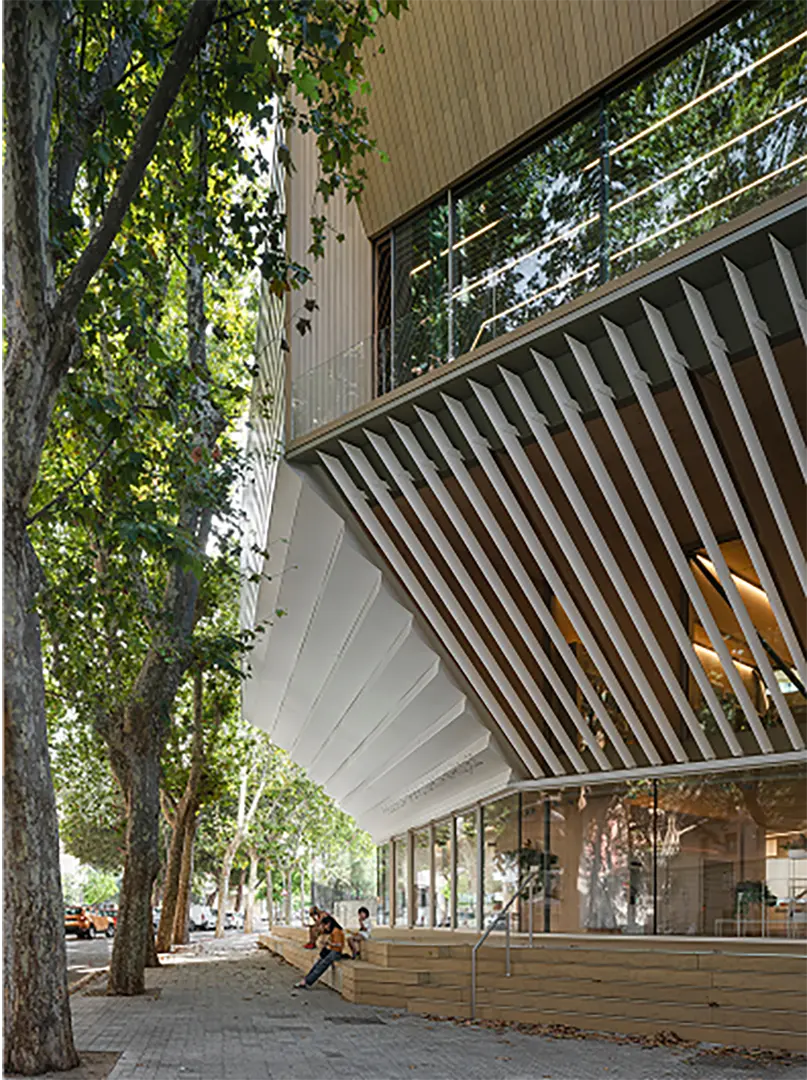
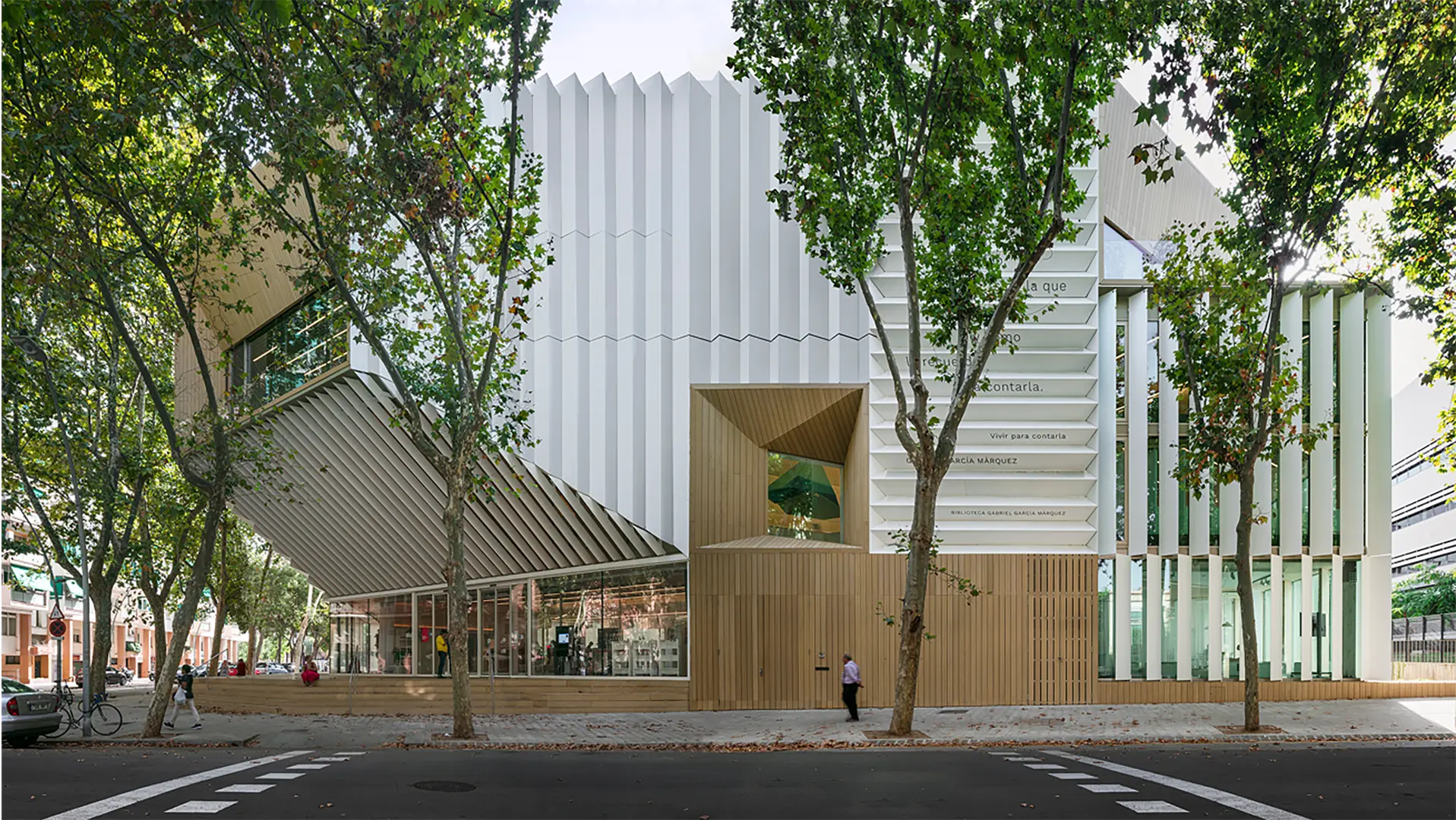
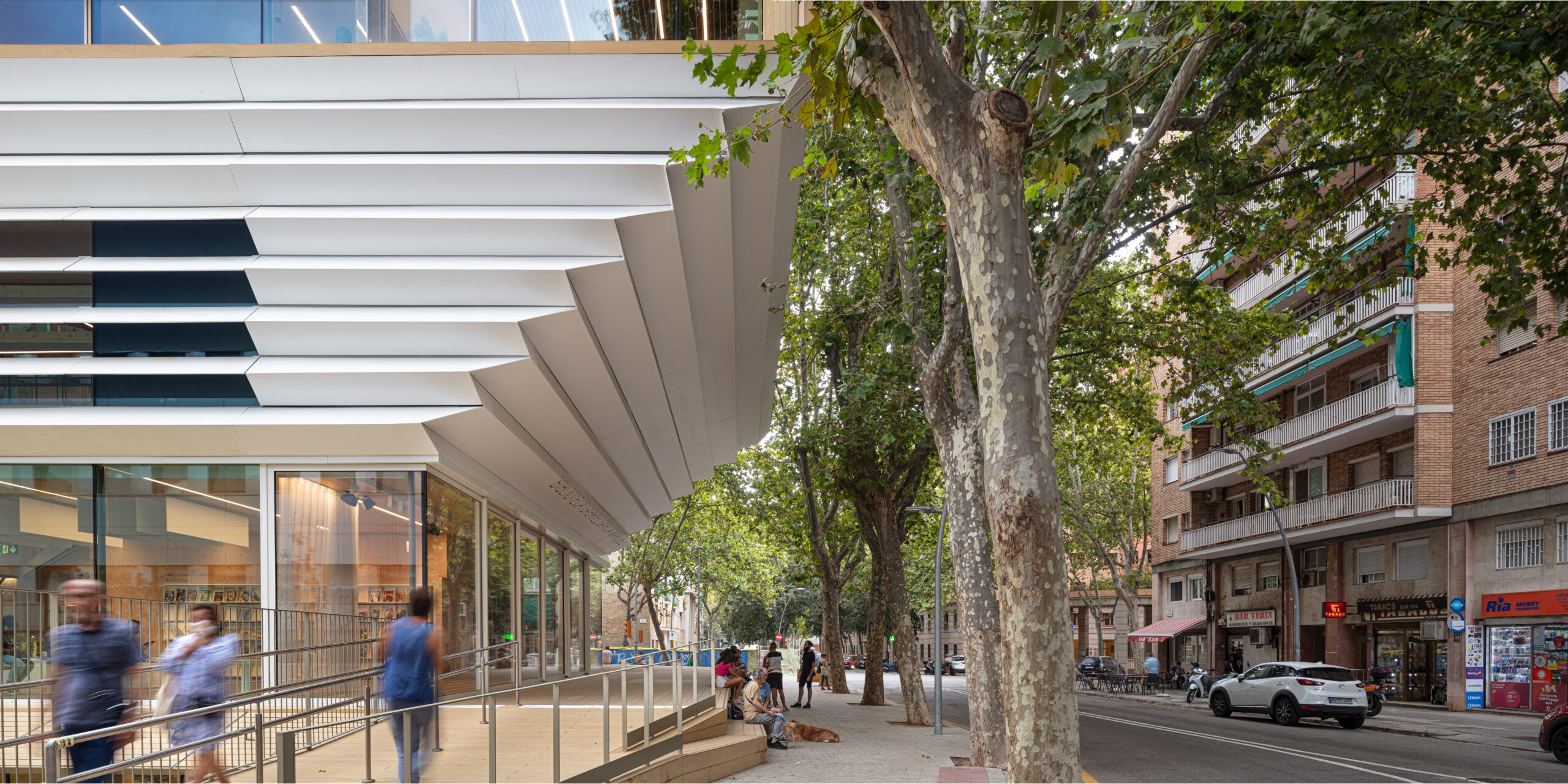
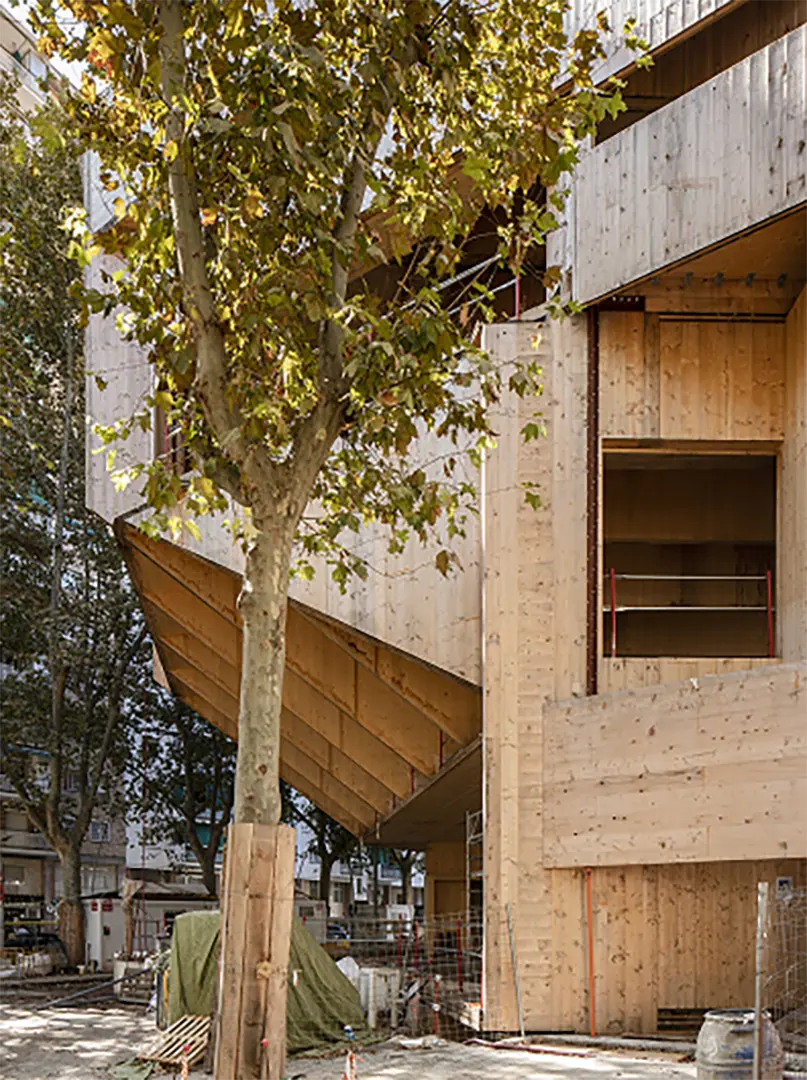
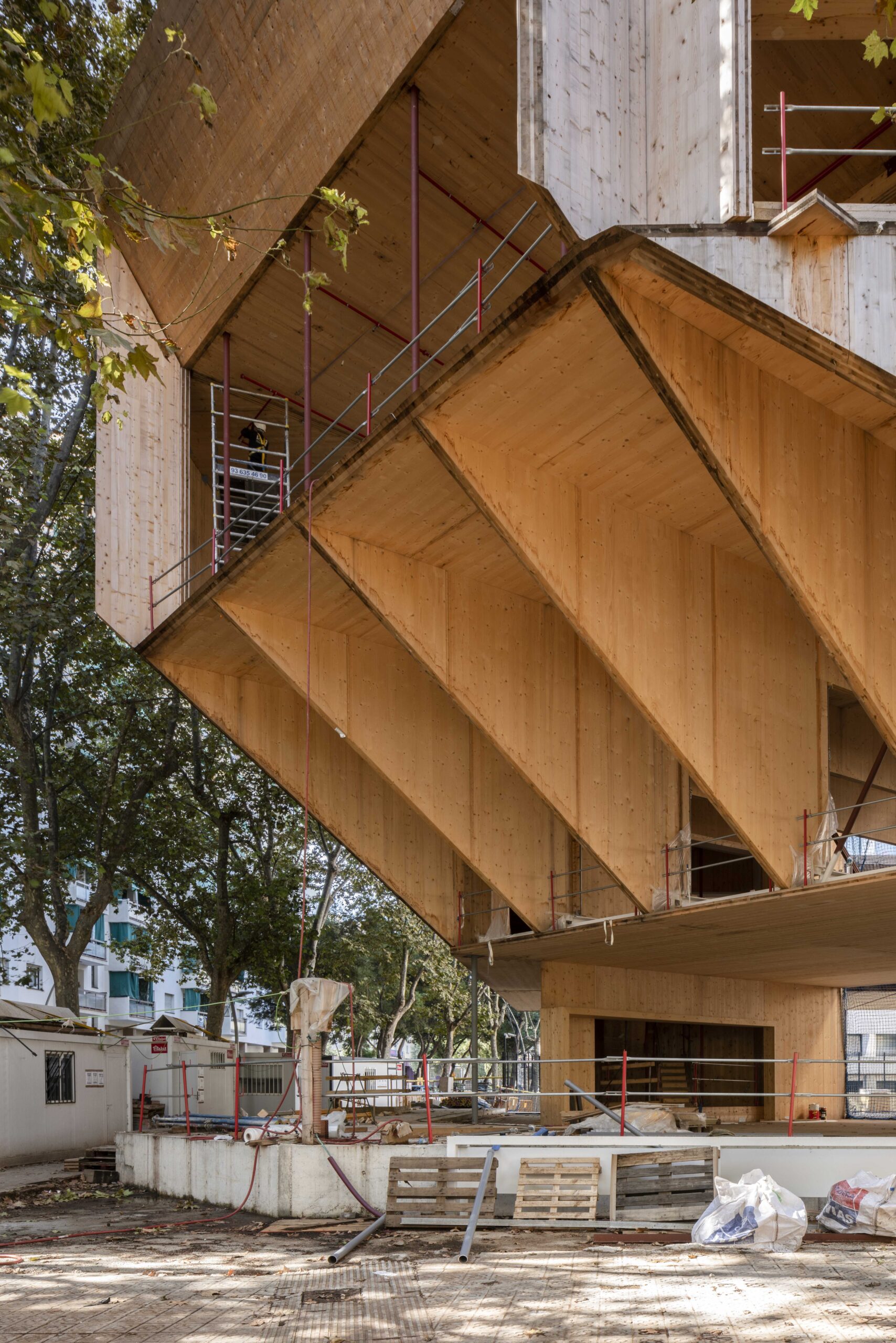
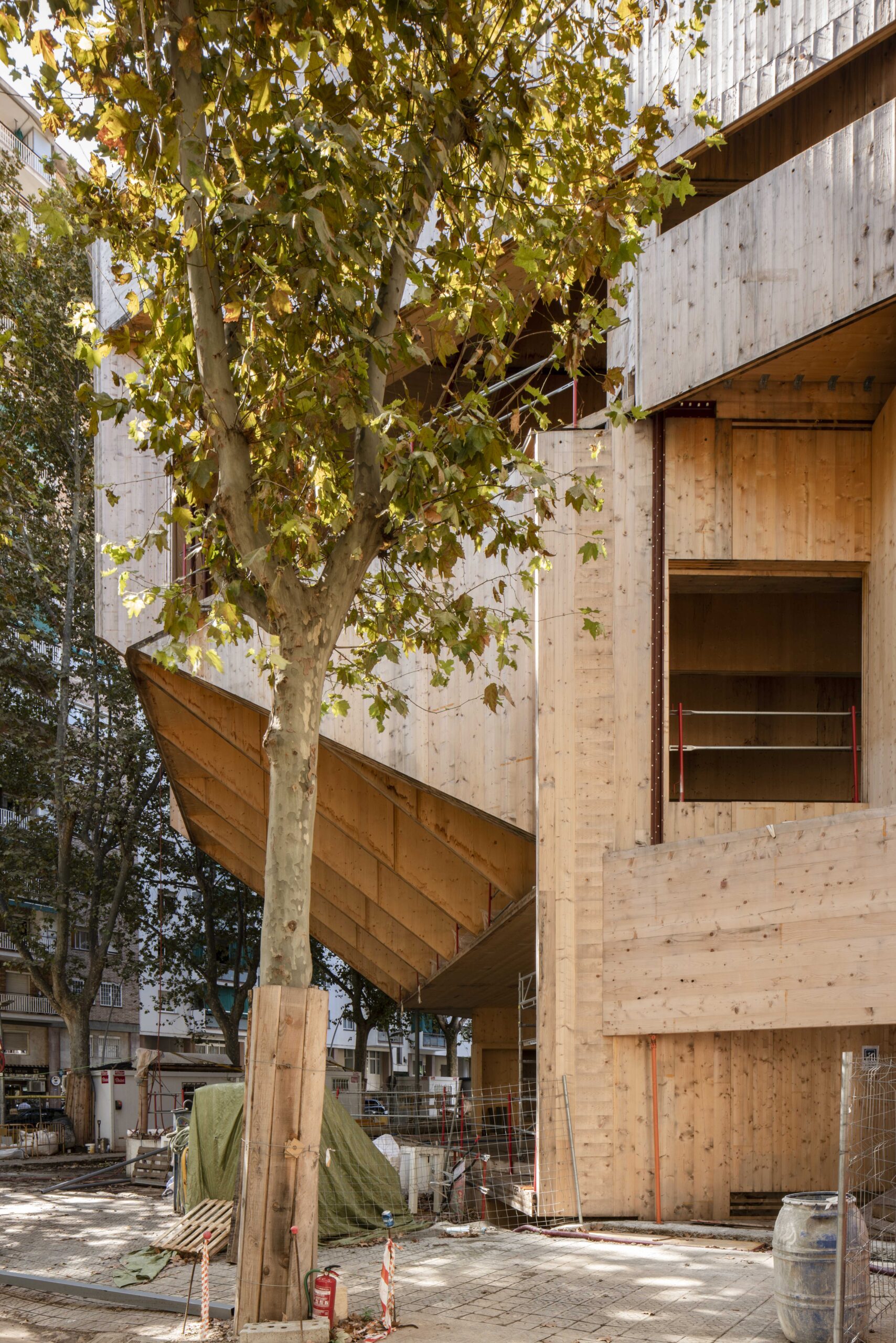
Located on a former parking lot behind a police station, at the intersection of two secondary streets, the building transforms a “non-place” into a vibrant community space. It stands atop a raised plaza that facilitates pedestrian flow and projects outward in a cantilever, creating an urban lobby beneath the canopy of existing trees. Beyond being a center for knowledge, the library responds to long-standing demands from local residents.
Relational Volume
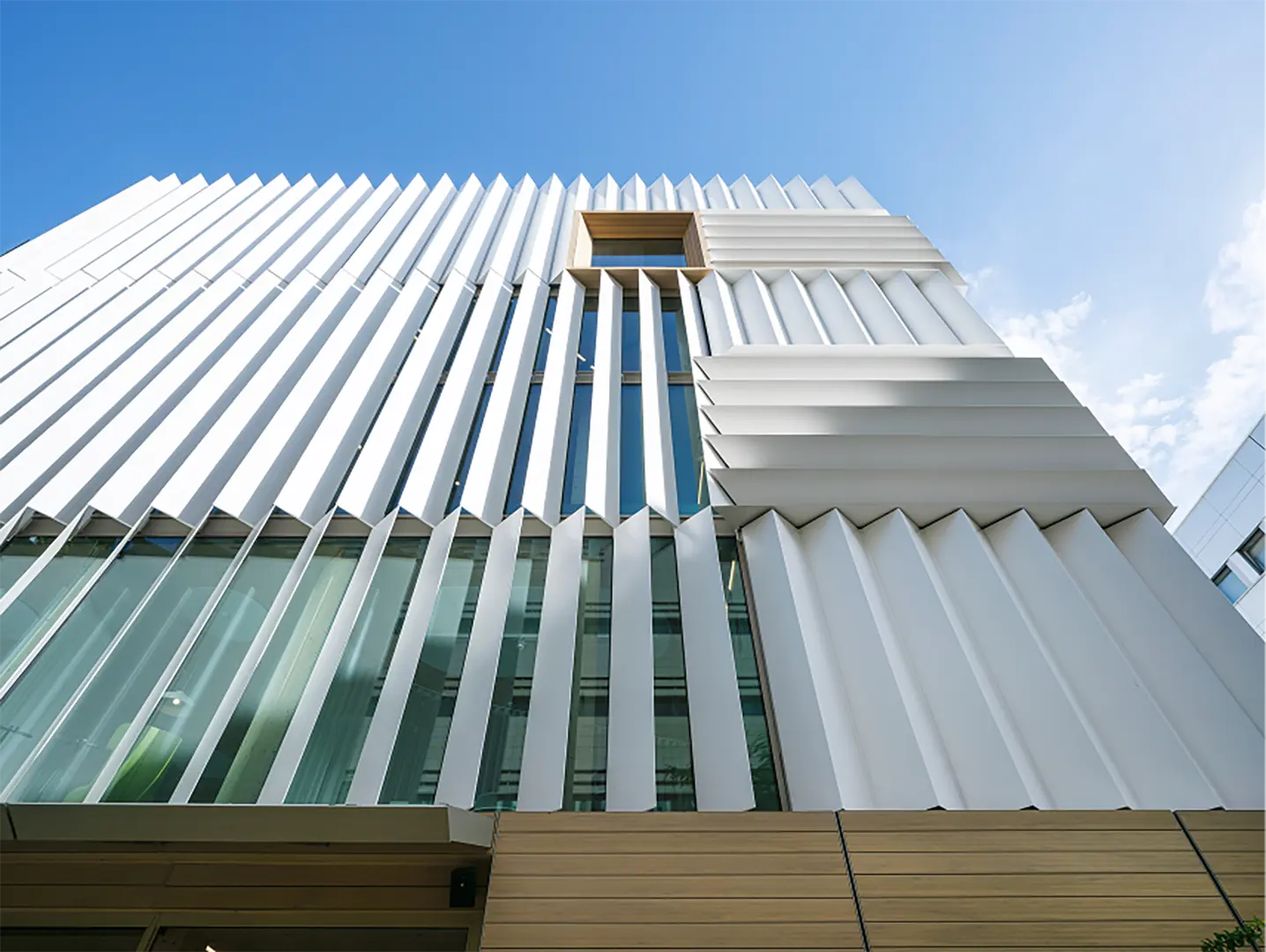
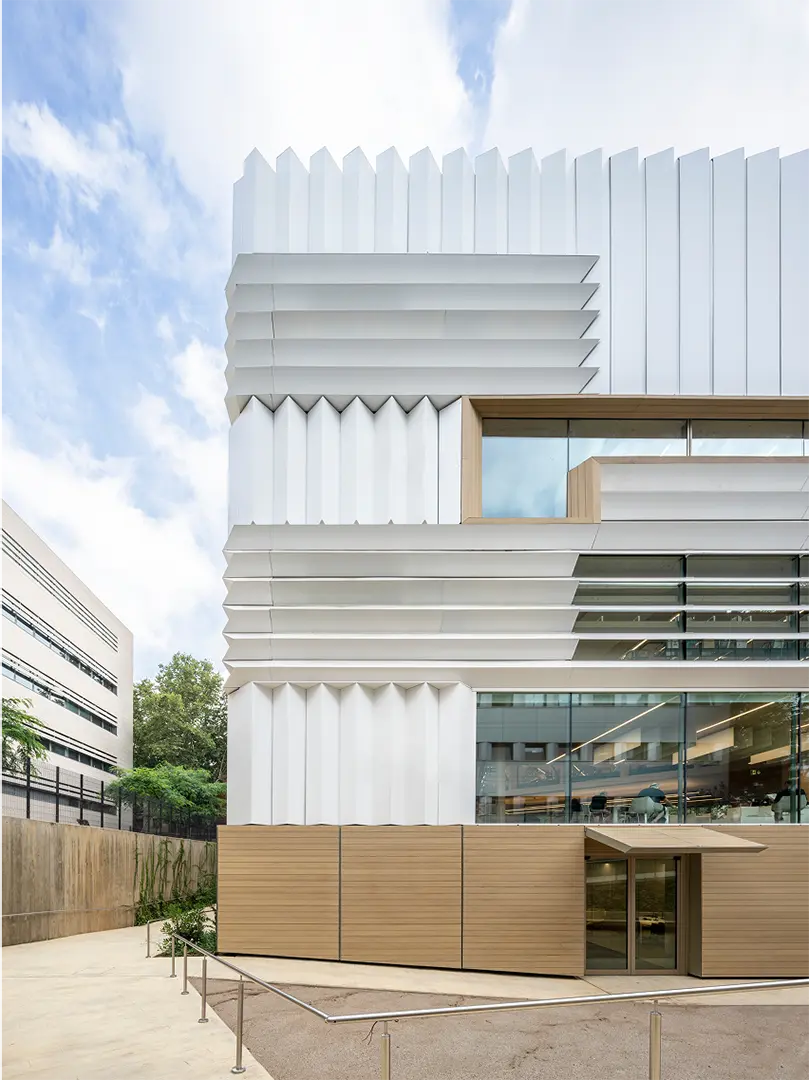
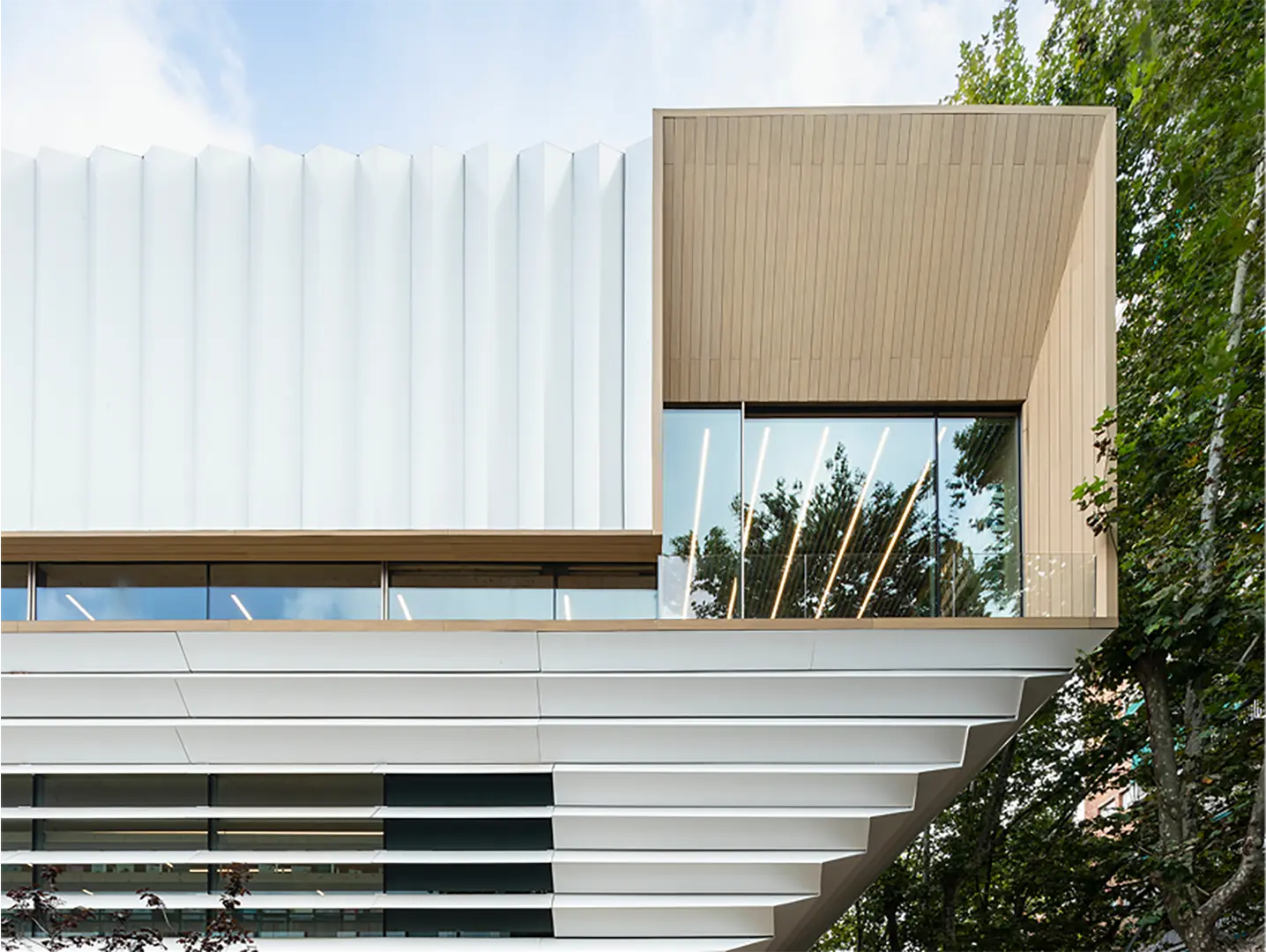
The building is conceived as a sculptural mass that evokes stacked book blocks and pierced, folded pages. Its design adapts to the context with façades that open toward strategic views, while respecting and reinterpreting the urban fabric of the Barcelona Eixample through a reimagined chamfer, turning the street corner into a new public square.
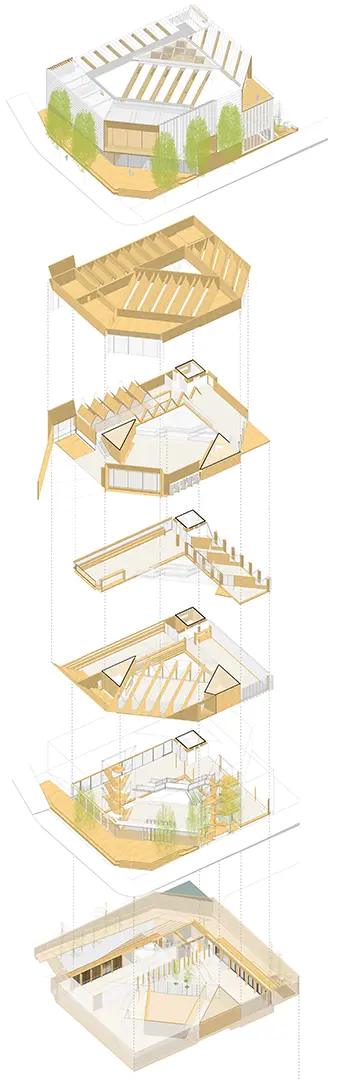
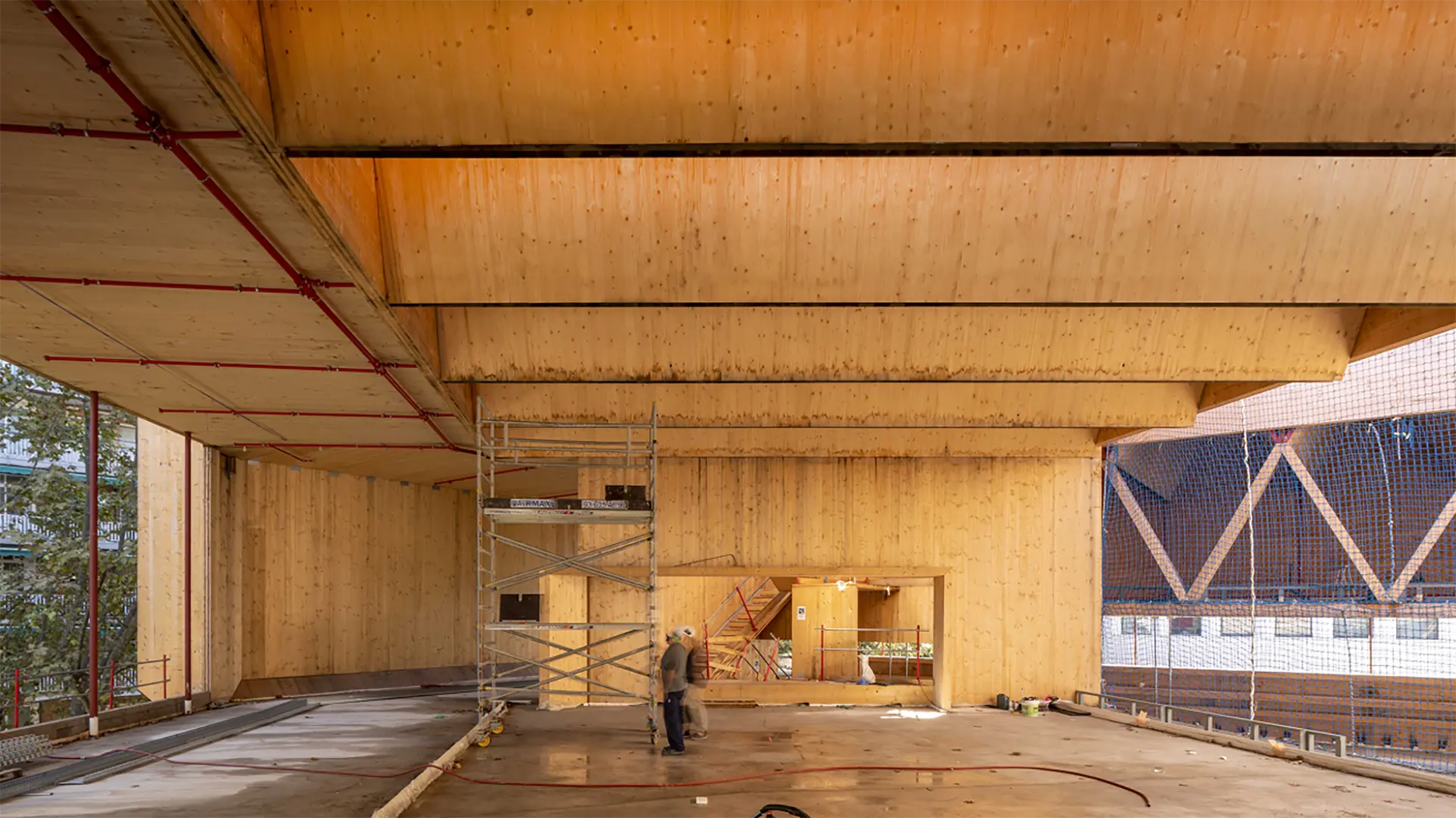
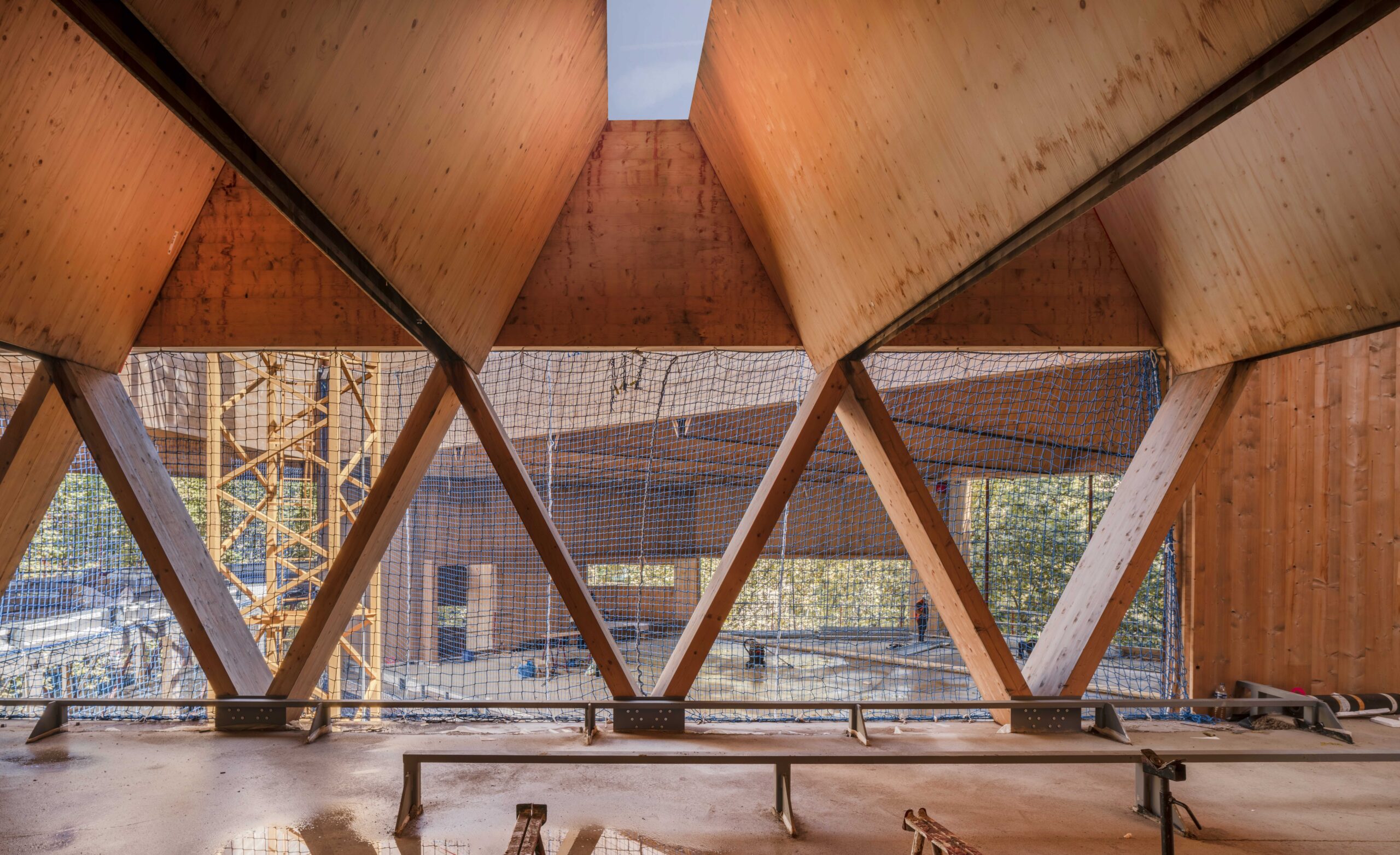
A 45° oblique geometry cuts through the complex, defining triangular courtyards, circulation cores, and an envelope that seeks indirect northern light and shields privacy from the neighboring police station.
Ecosystemic Timber Structure with LEED Gold Certification
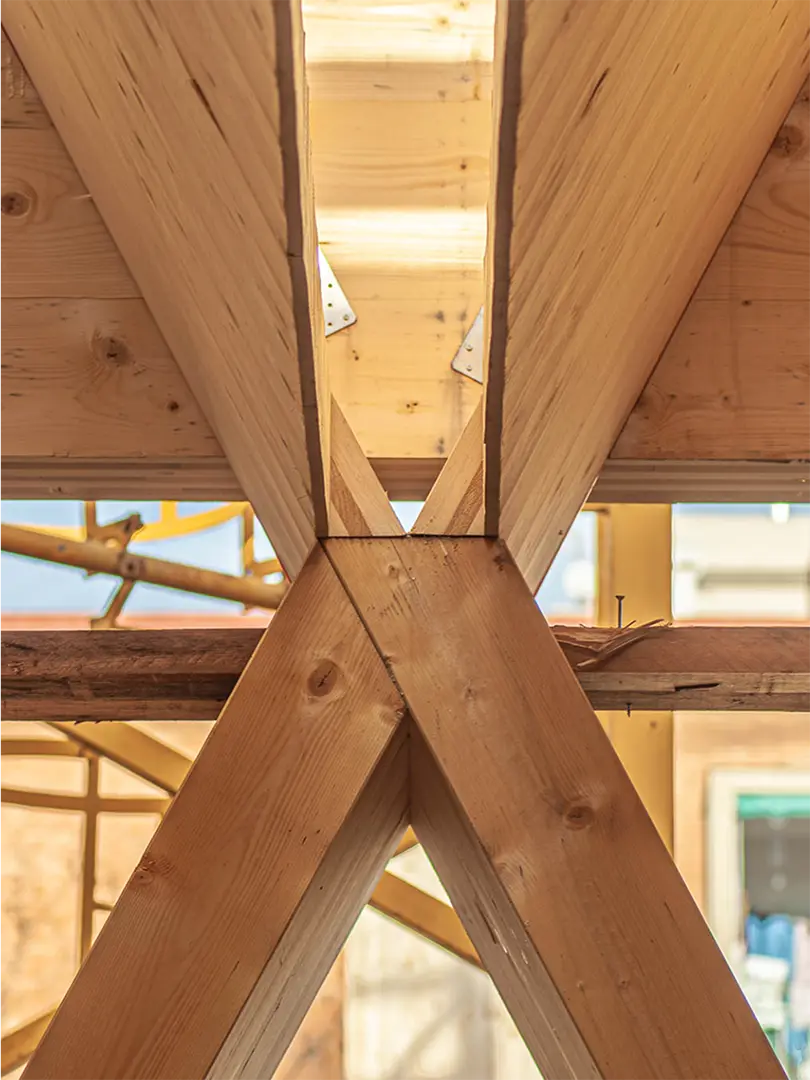
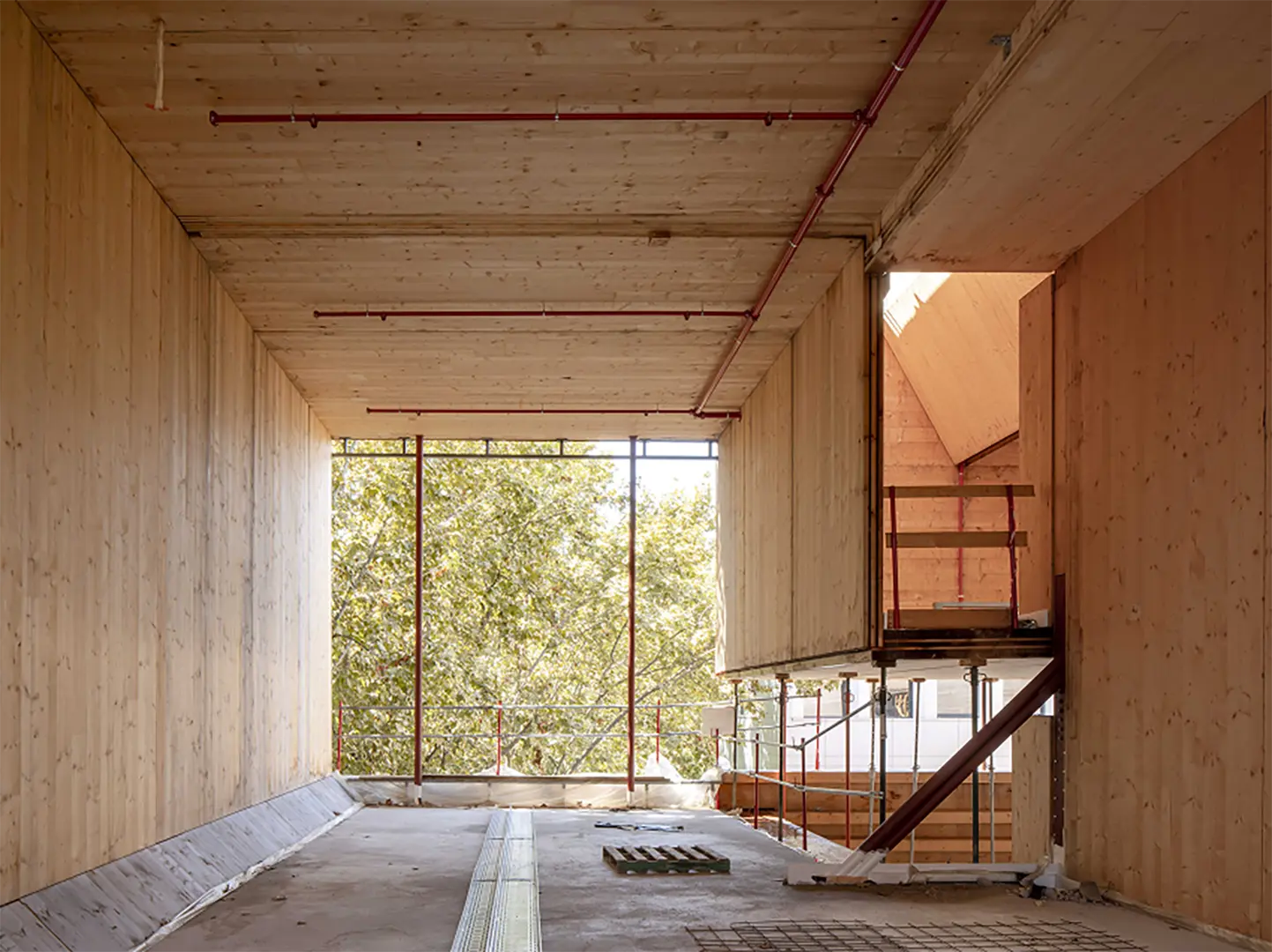
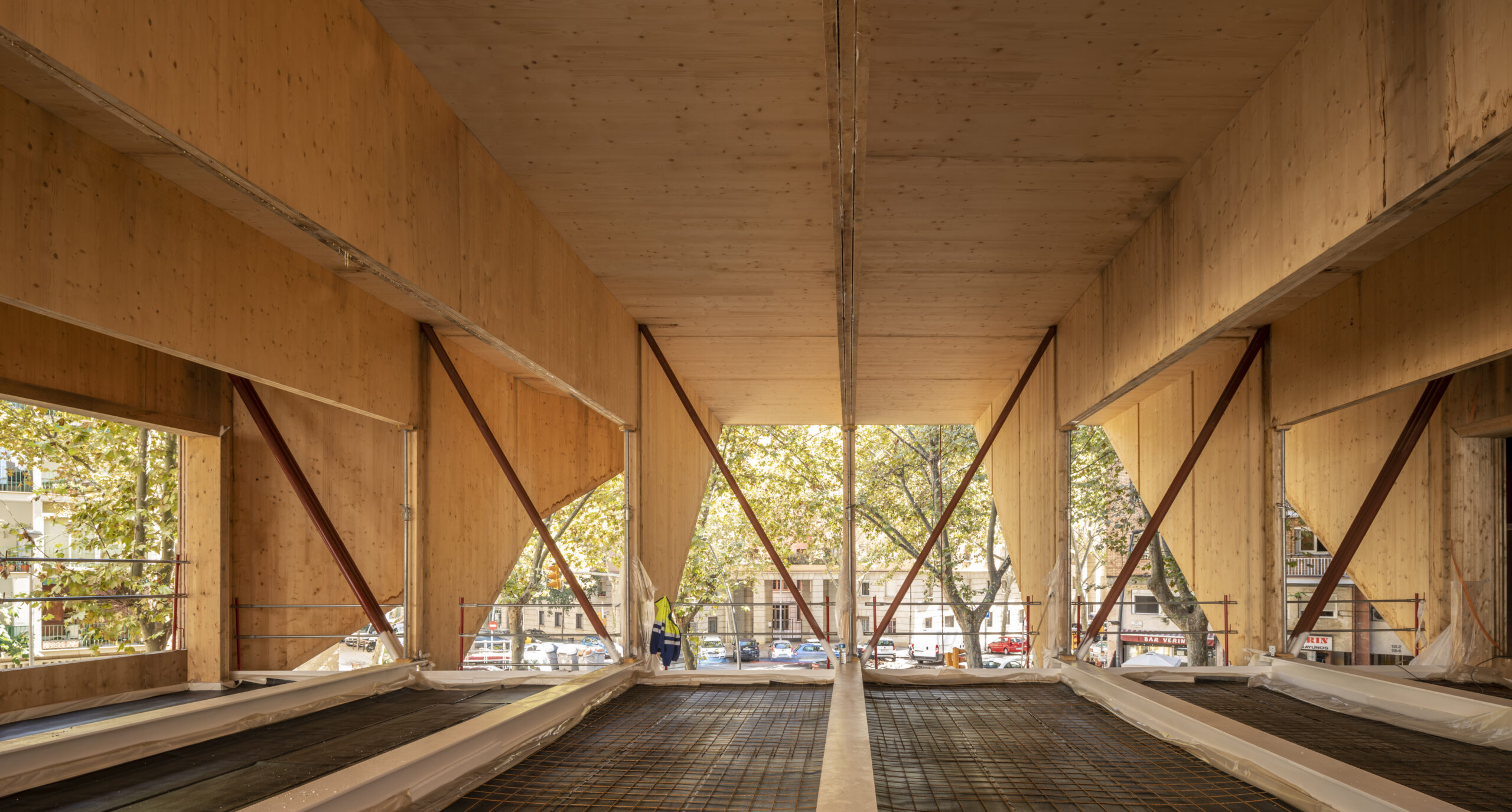
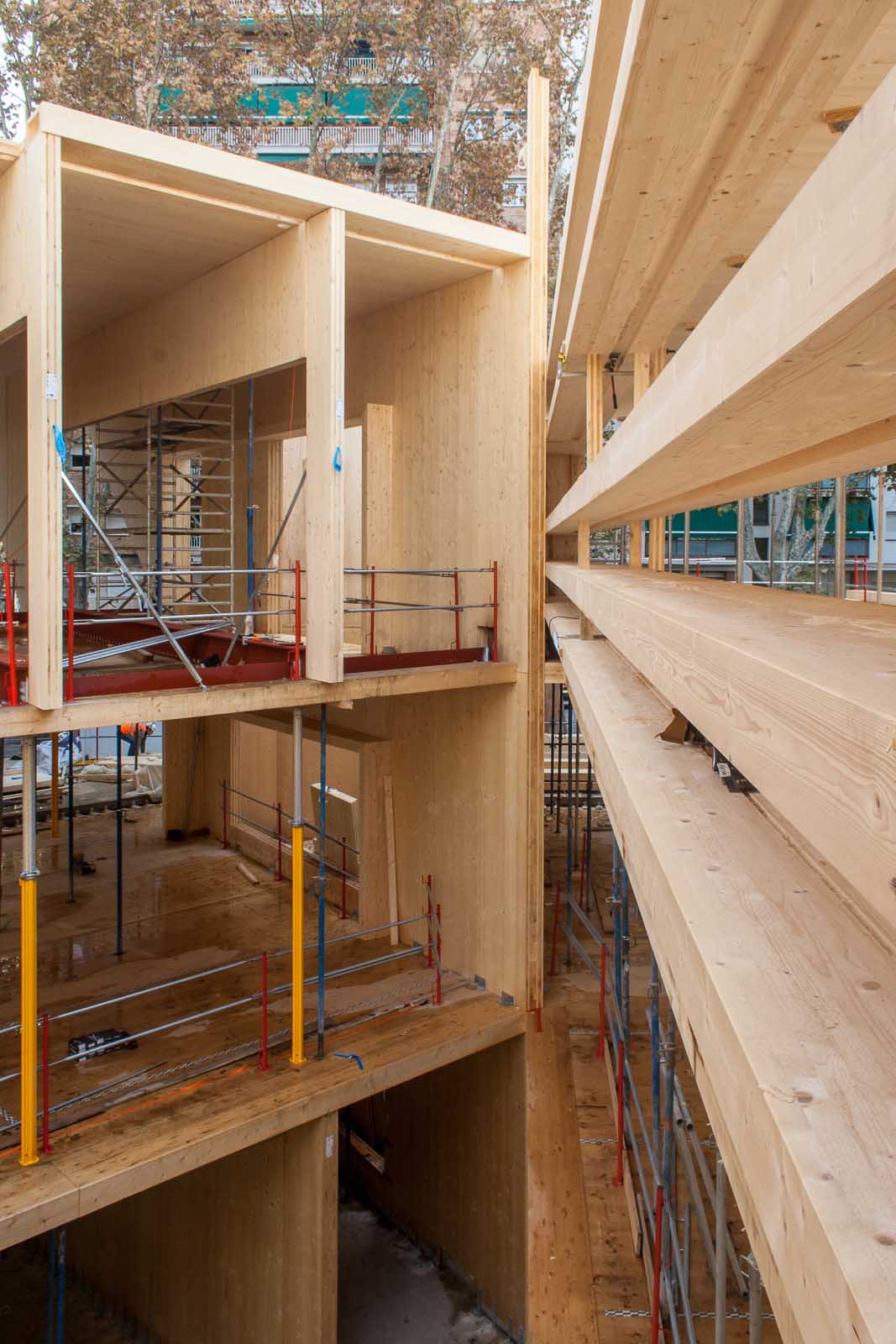
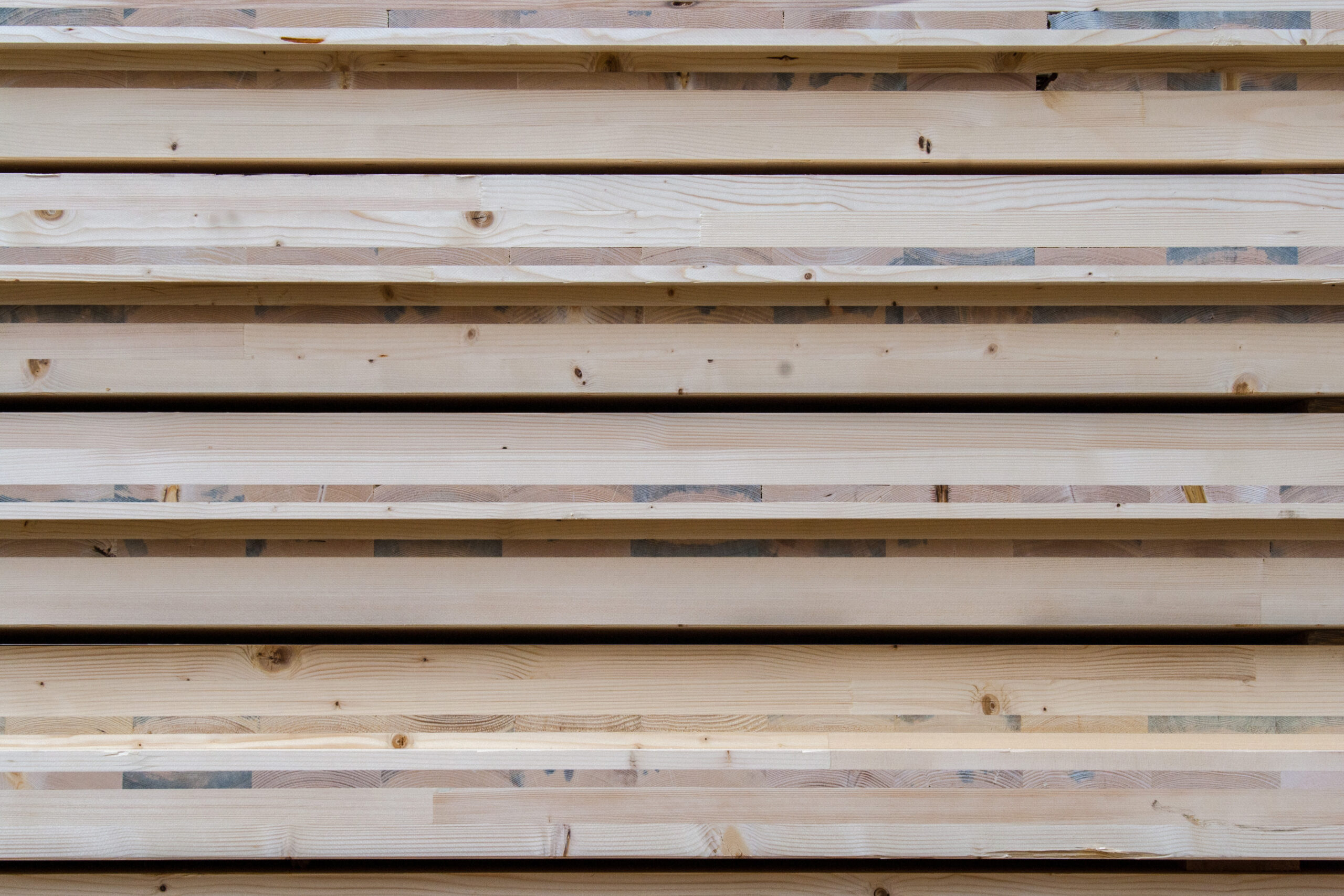
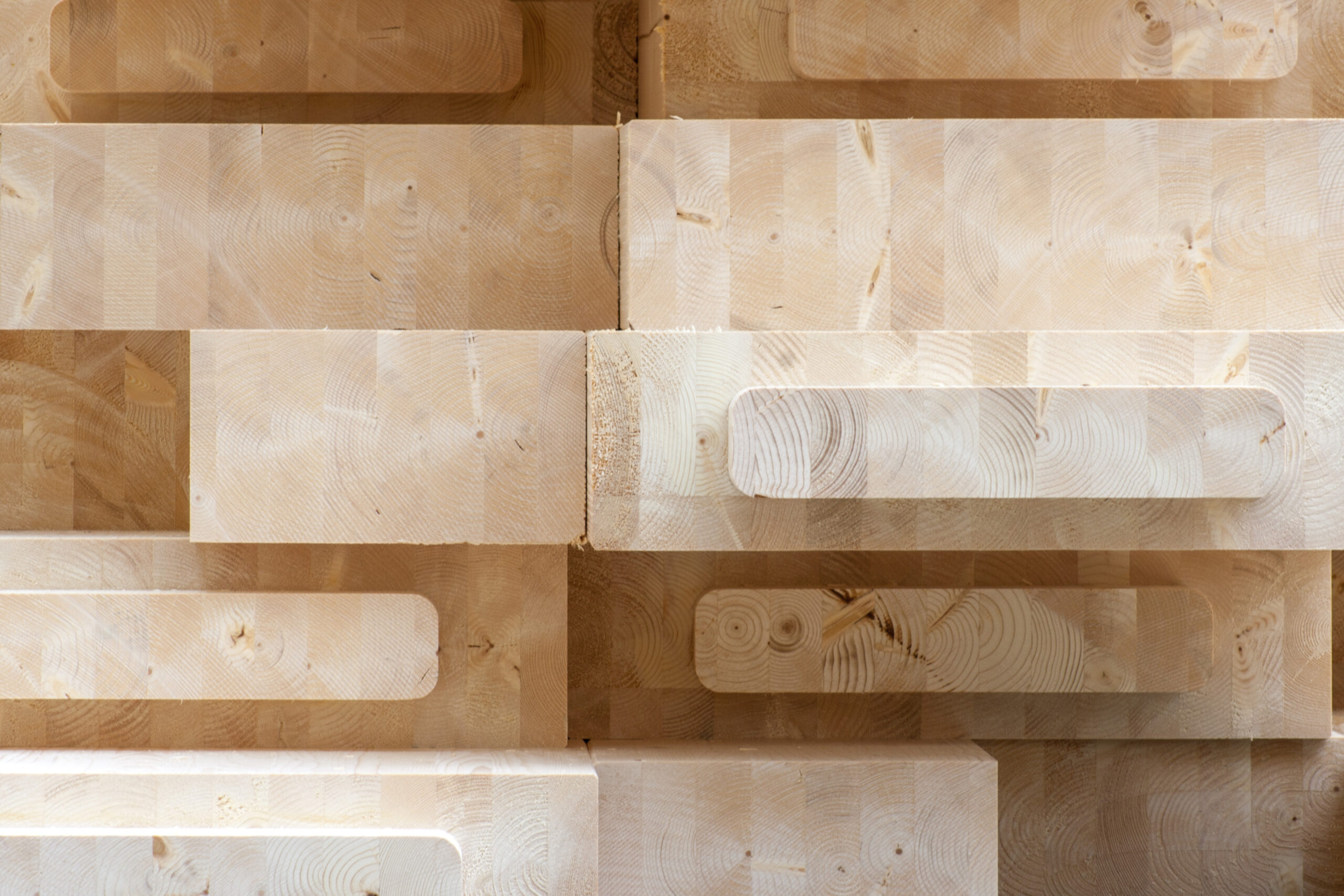
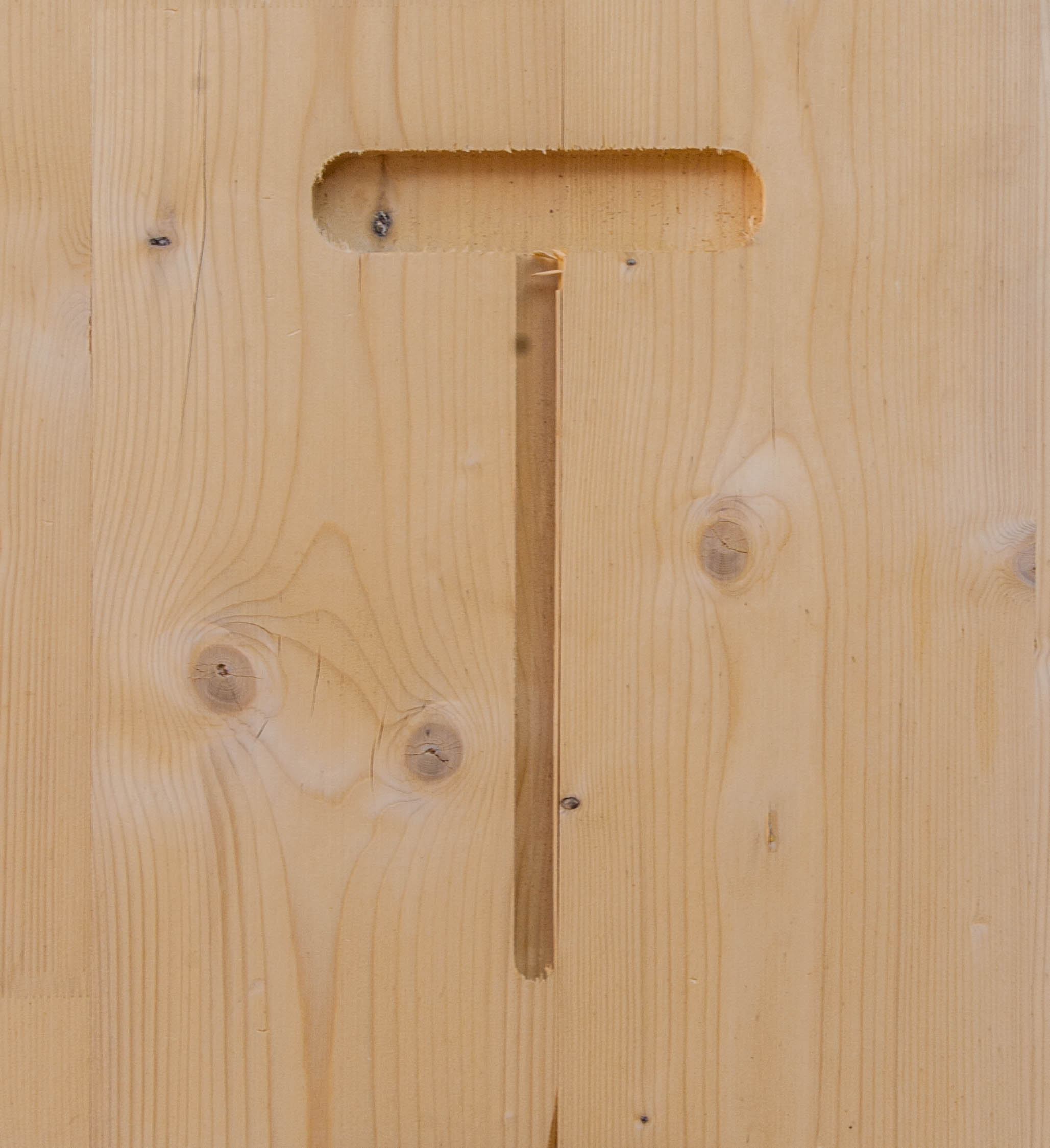
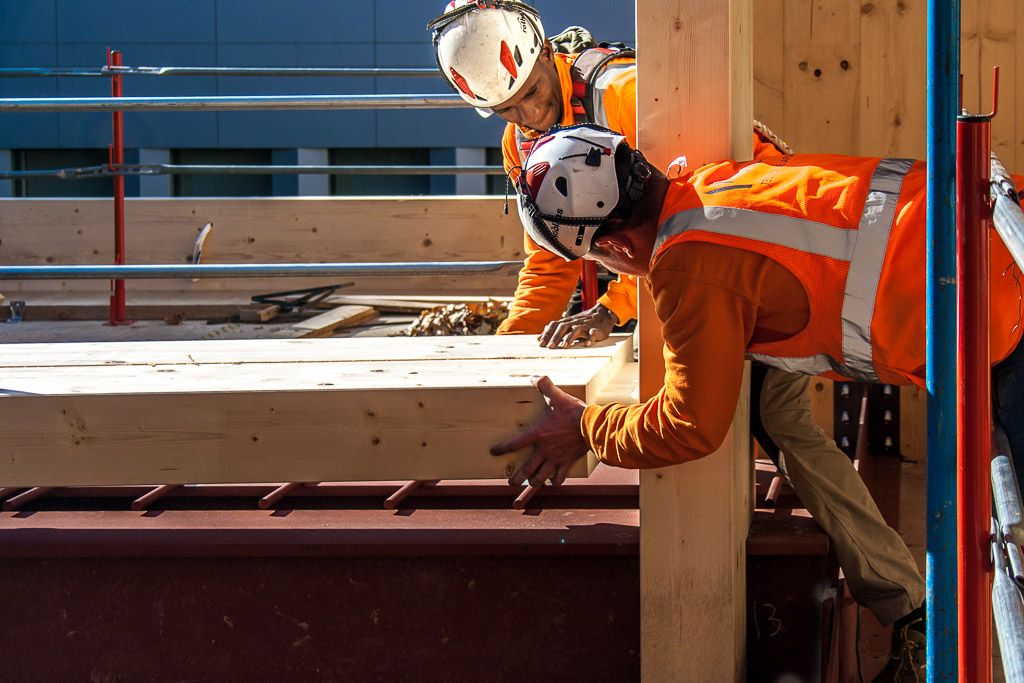
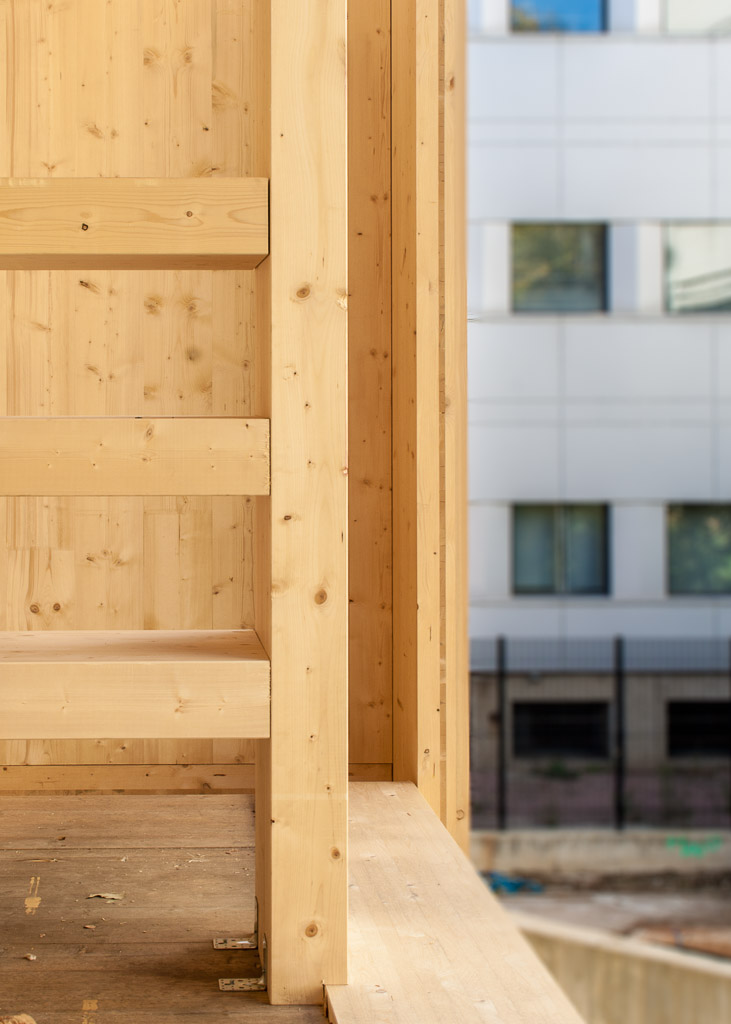
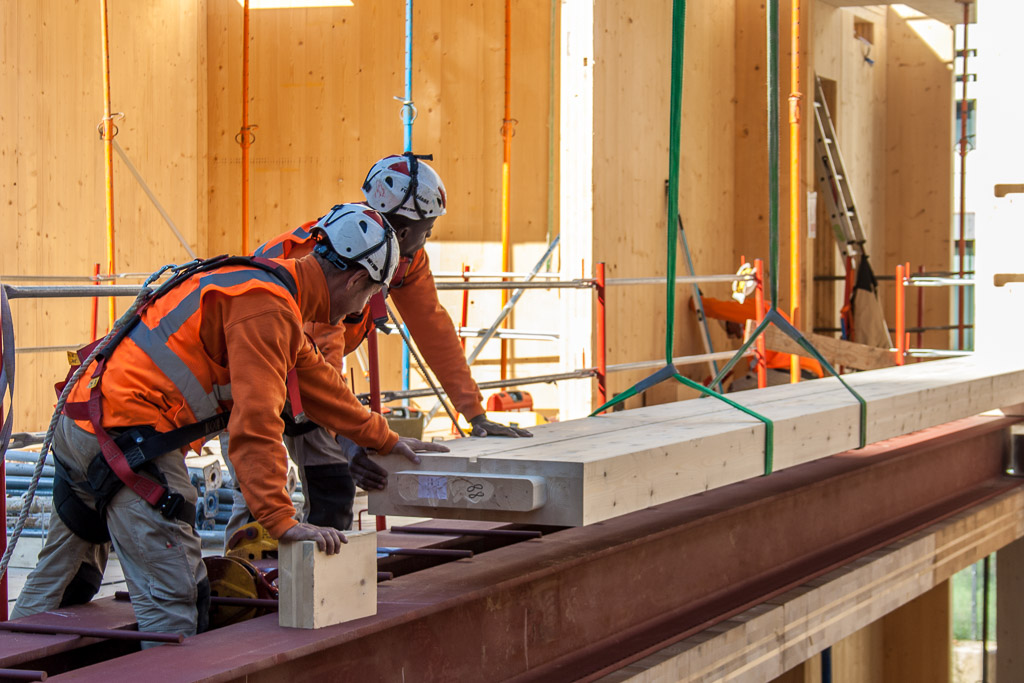
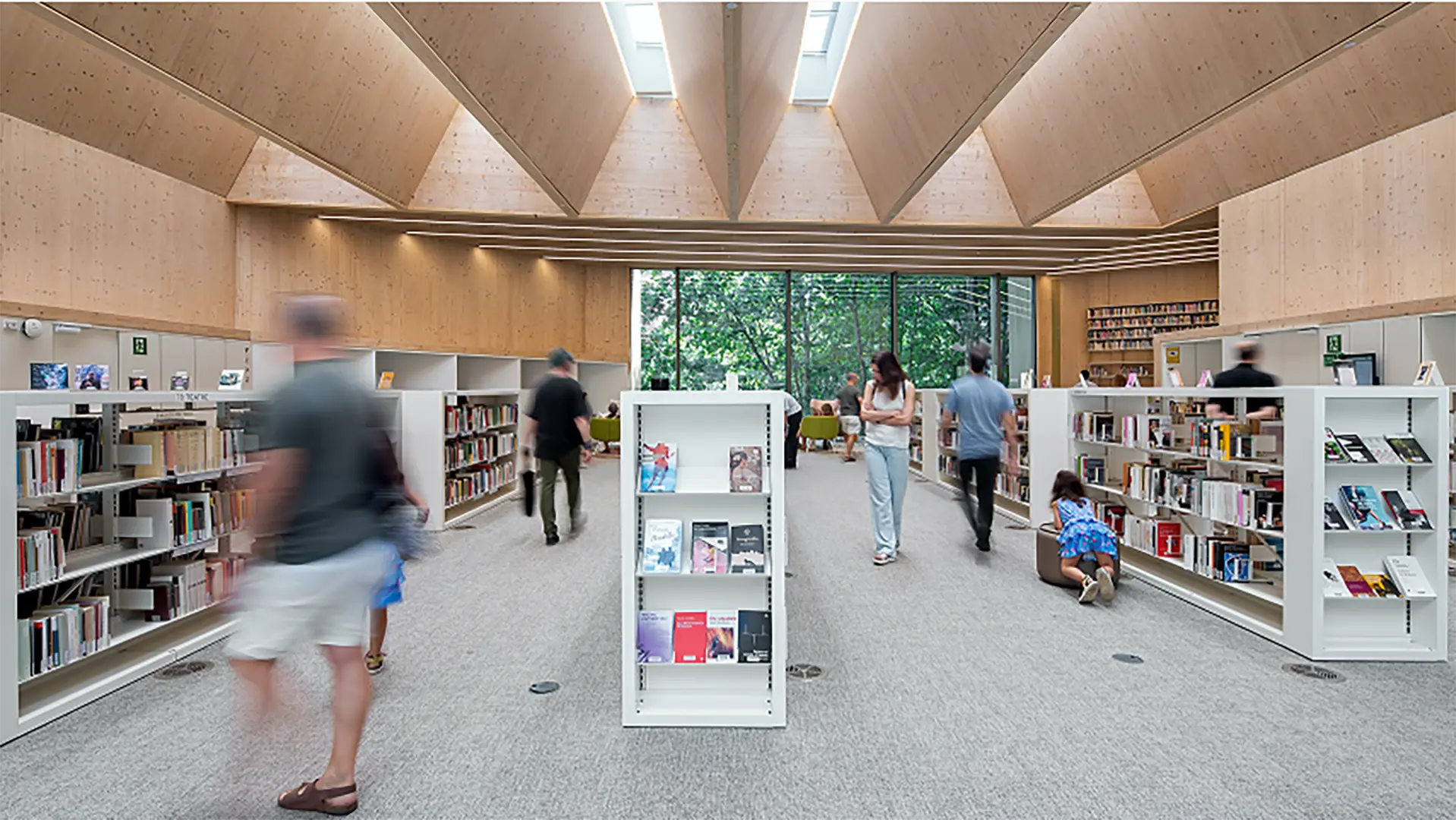
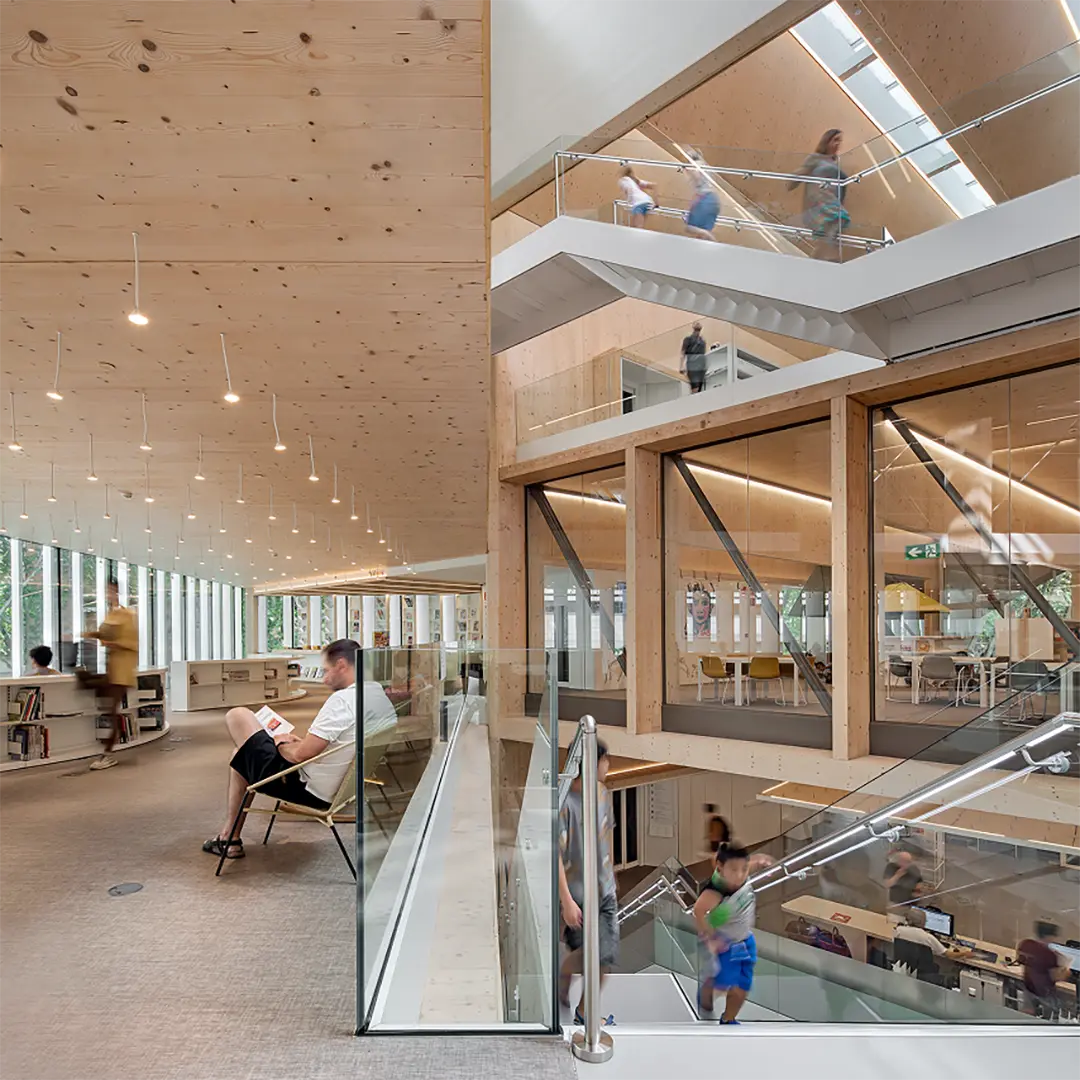
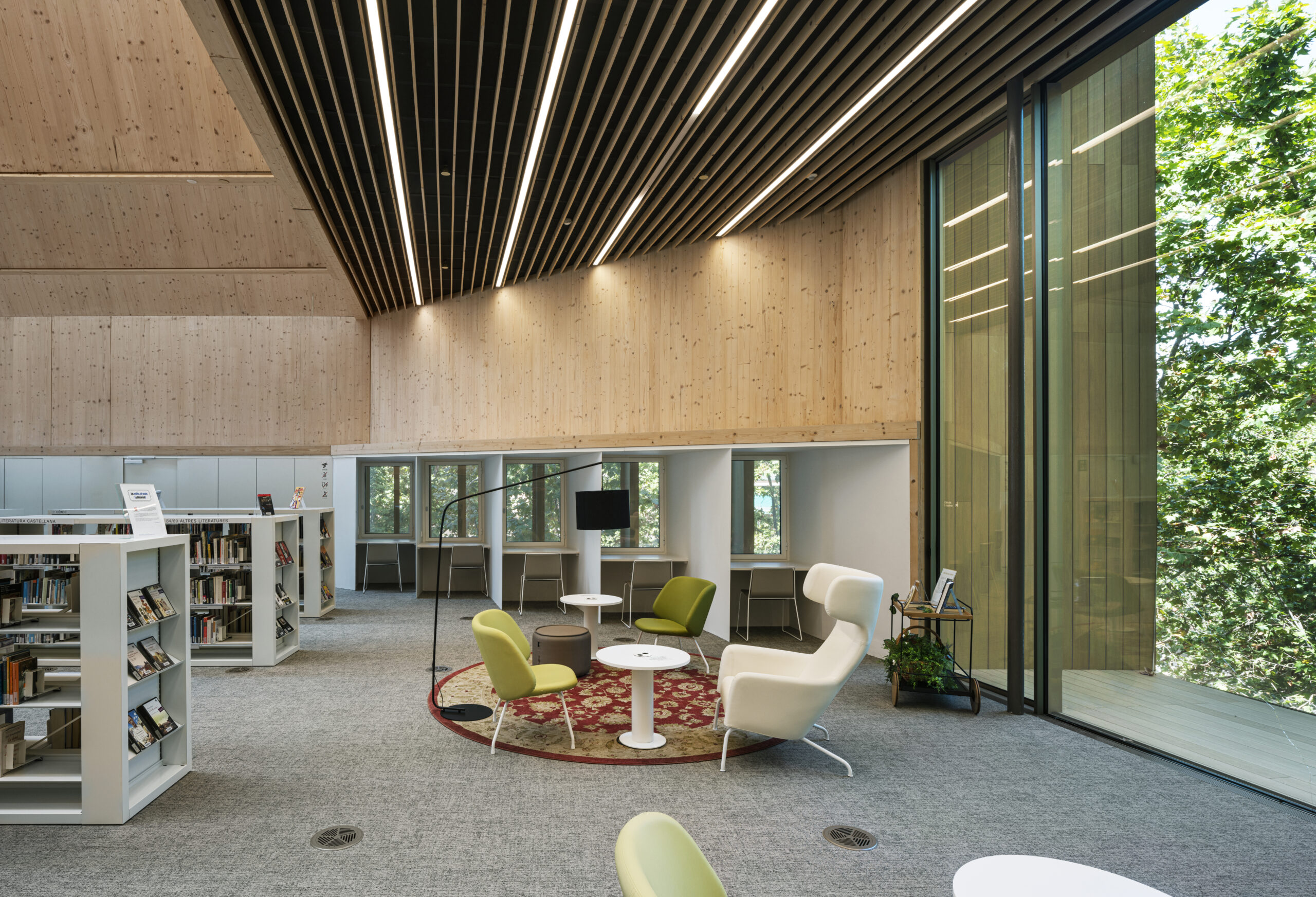
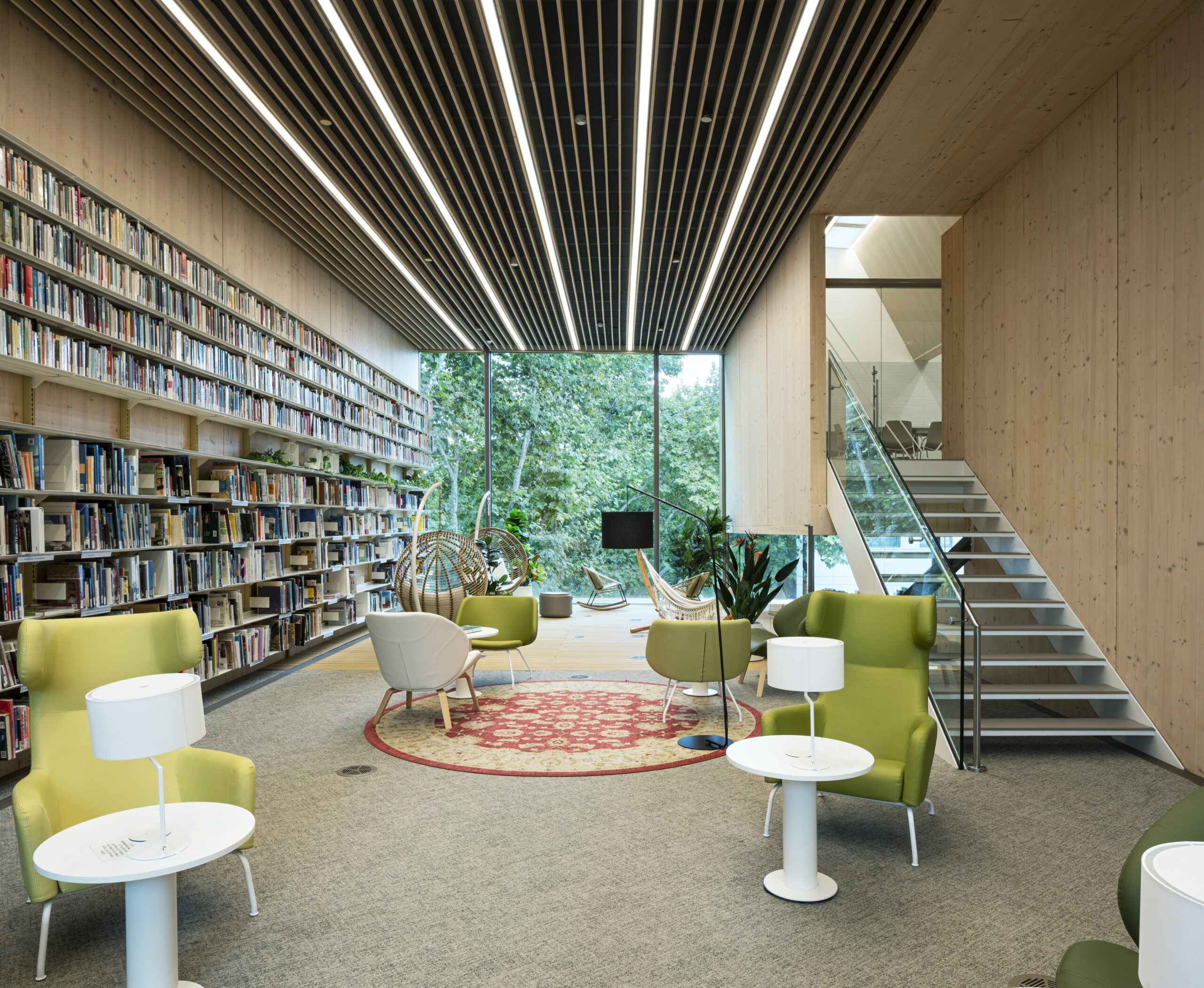
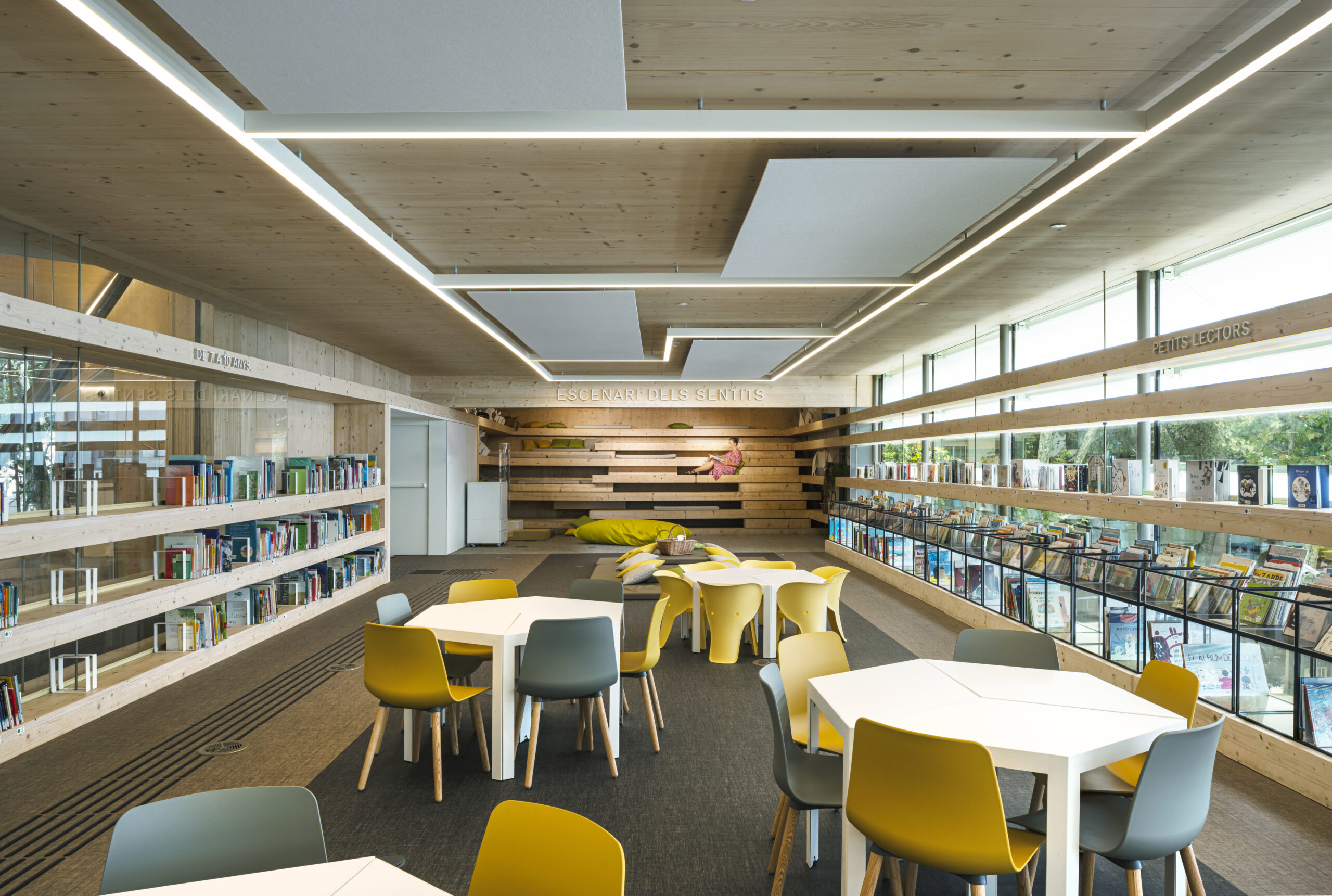
The structure combines glulam and cross-laminated timber (CLT), forming the largest volume of exposed wood in Europe at the time of its opening, complemented by localized steel reinforcements. This combination creates a warm, light, and refined atmosphere.
The library implements advanced strategies for sustainability and energy efficiency, recognized with a LEED Gold certification: low environmental impact materials, CO₂ storage, solar energy capture via photovoltaic panels, rainwater reuse, and a lightweight ventilated envelope, among others.
Pioneering Program and Holistic Design
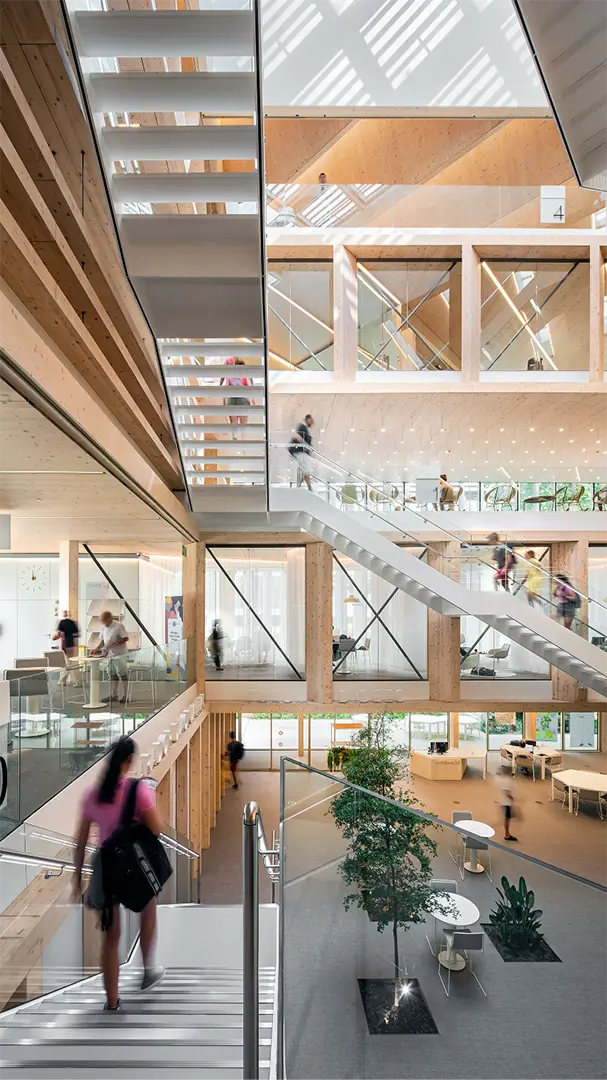
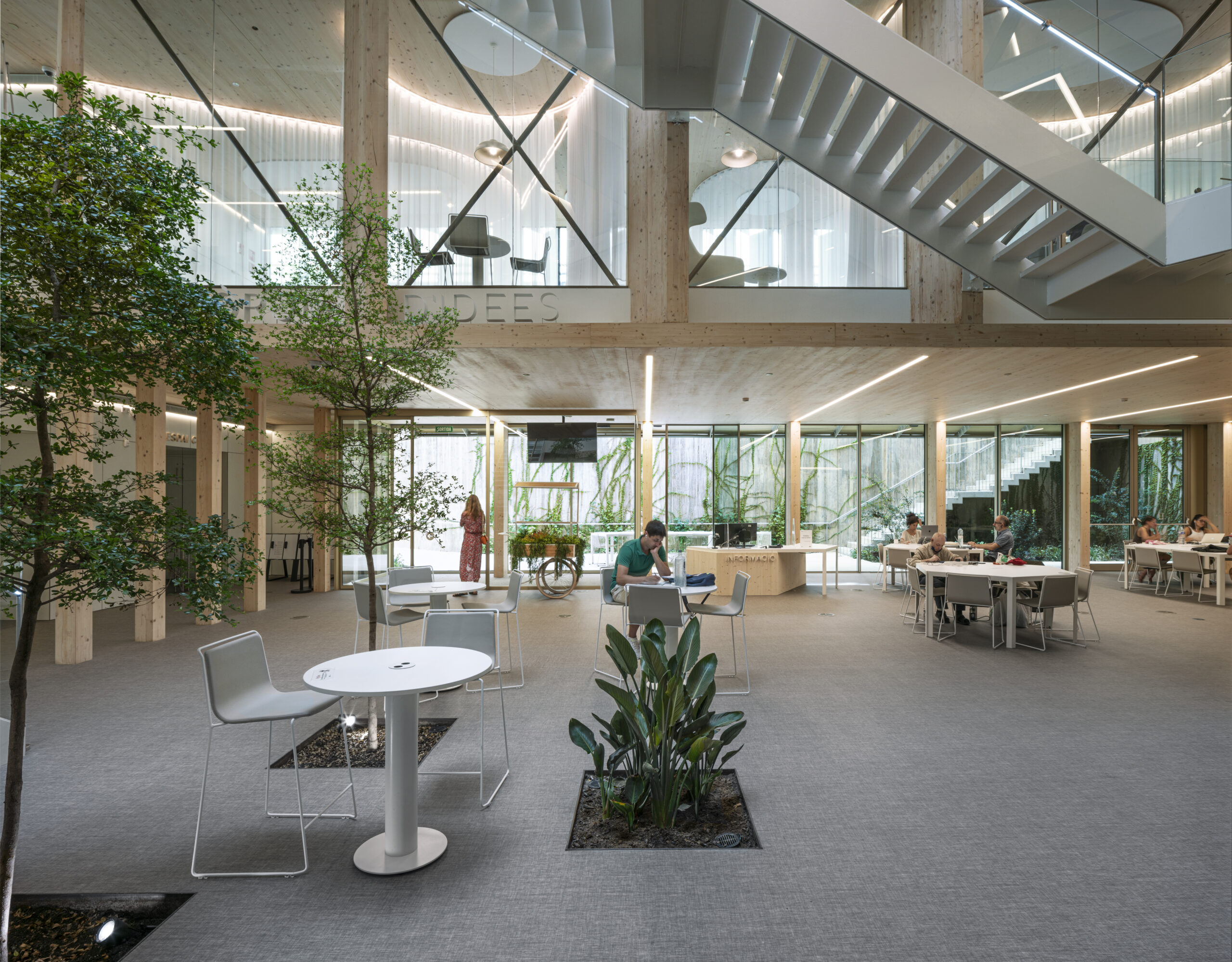
The project redefines the model of the contemporary public library. Fluid circulation around a triangular courtyard, the central helical staircase, and a flexible spatial organization encourage interaction, exchange, and socialization.
Developed in collaboration with Bibliotecas de Barcelona, the research project What is a 21st-century library? is based on an extensive programmatic study that analyzes new social and technological needs.
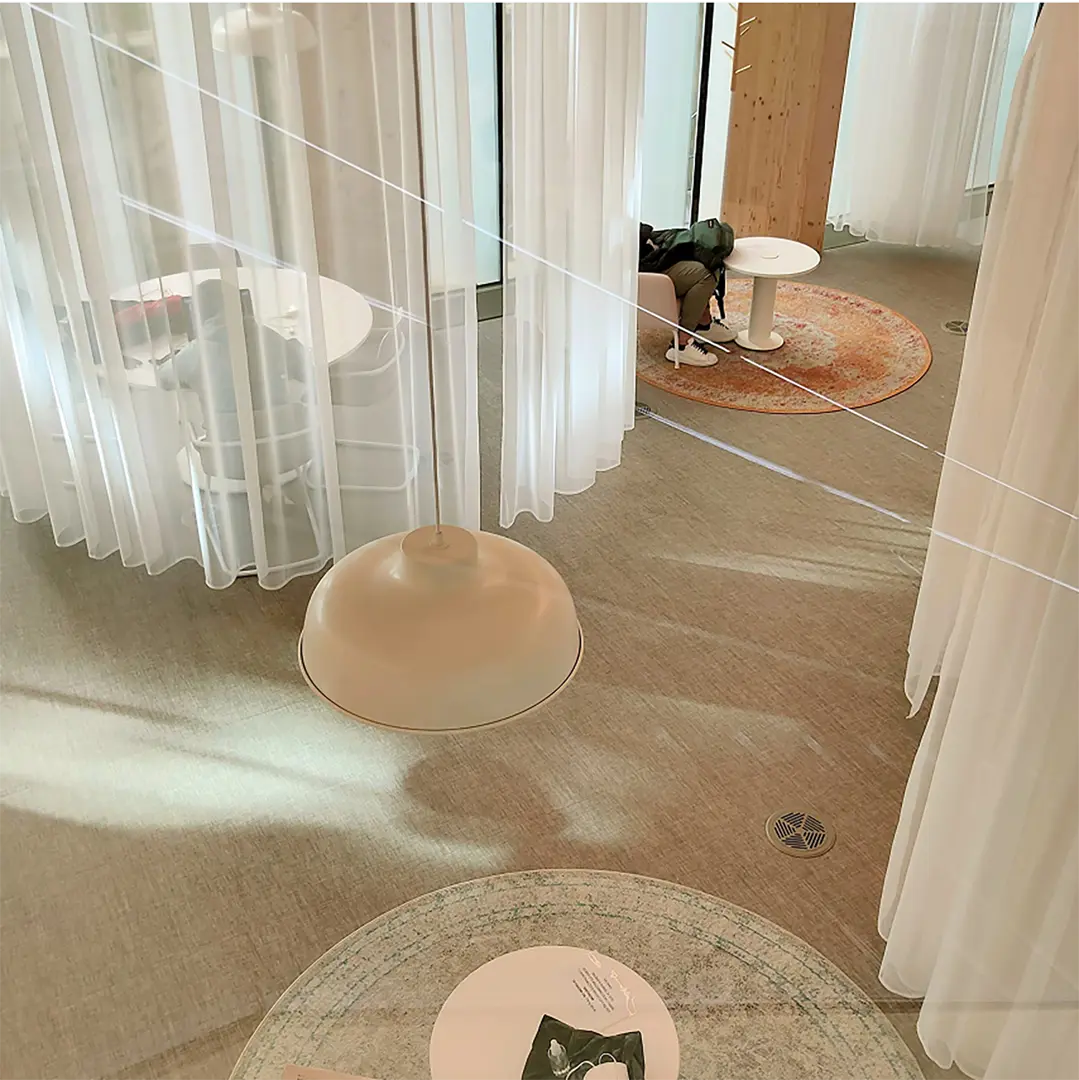
Ecosystemic design integrates structure, envelope, furniture, and use into a coherent and dynamic system. Spaces such as the Agora-Showcase, the Forum of Ideas, the Park, the Spiral of Encounters, and the Palace of Reading form a welcoming, diverse, and stimulating environment. The Gabriel García Márquez Library is a public space to live in and share—a home for all.
Building Social Bonds
More than just a reading space, the library has established itself as a vital meeting point for the Sant Martí neighborhood. Since its opening, it has fostered alliances with local organizations and promoted a diverse cultural program including talks, concerts, workshops, and collaborative activities.
This strong connection with the social fabric has allowed the library to become, in the words of Eric Klinenberg, a true “Palace for the People”, a place that has won the heart of its community.