Typological Innovation
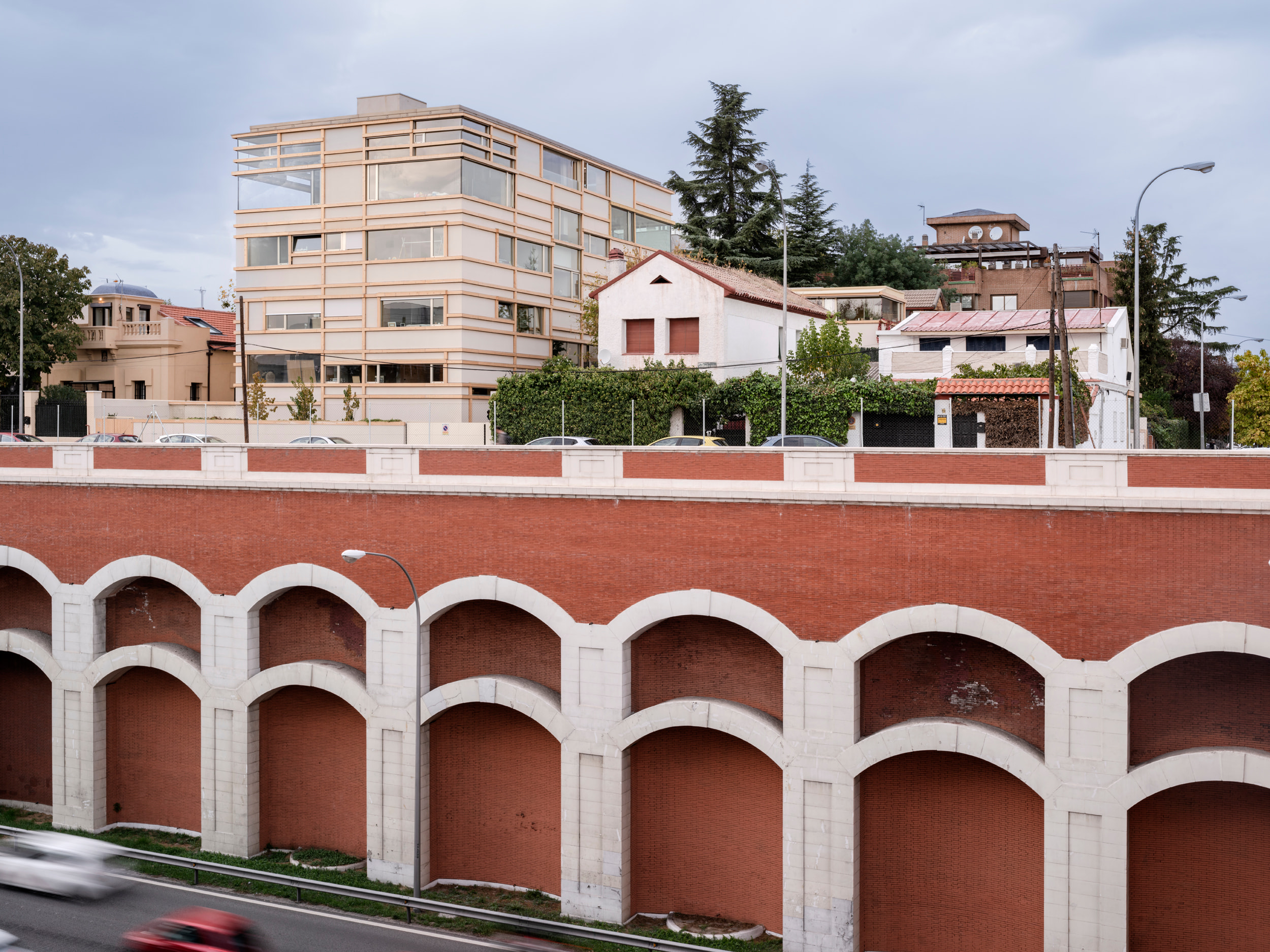
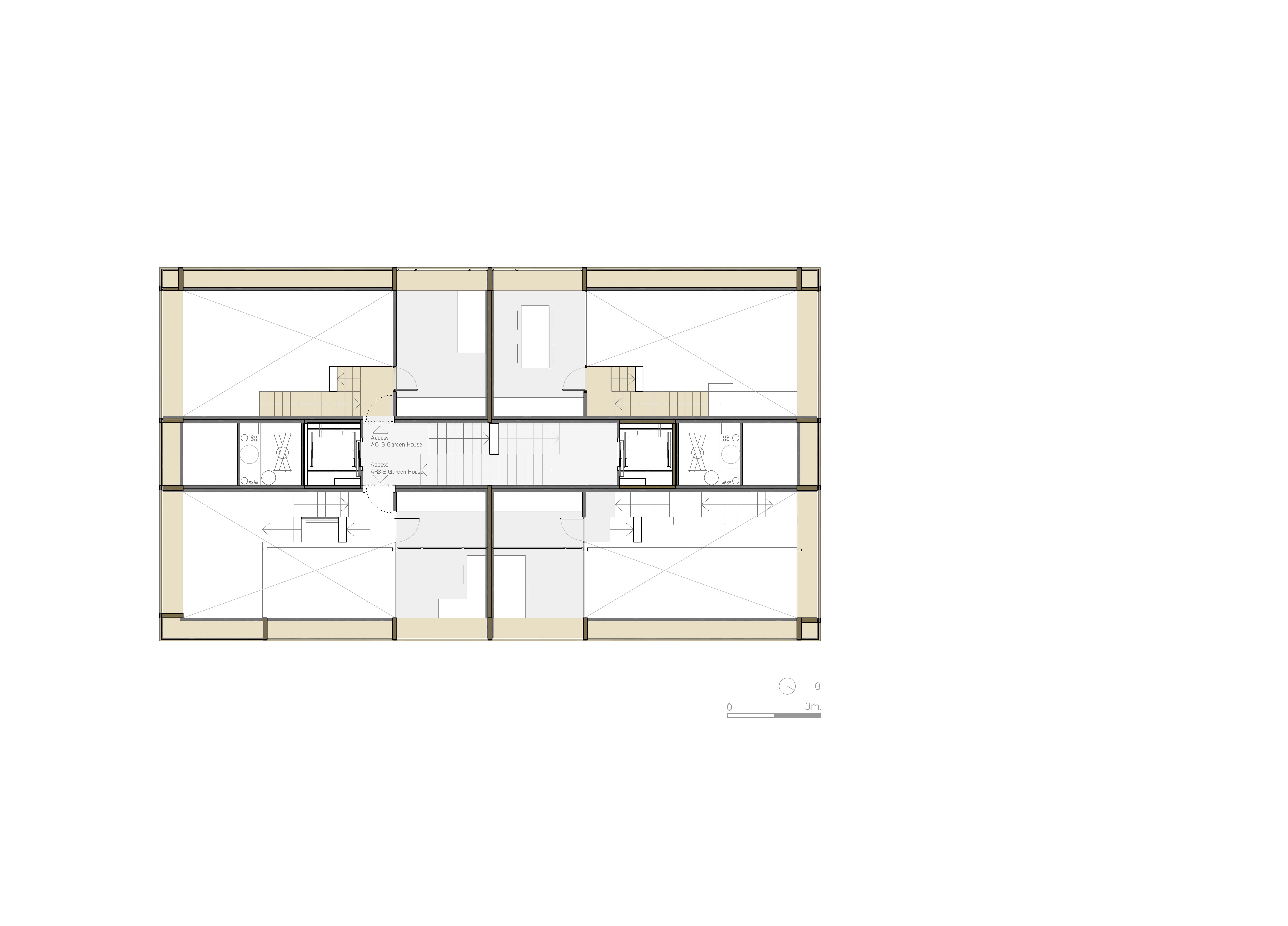
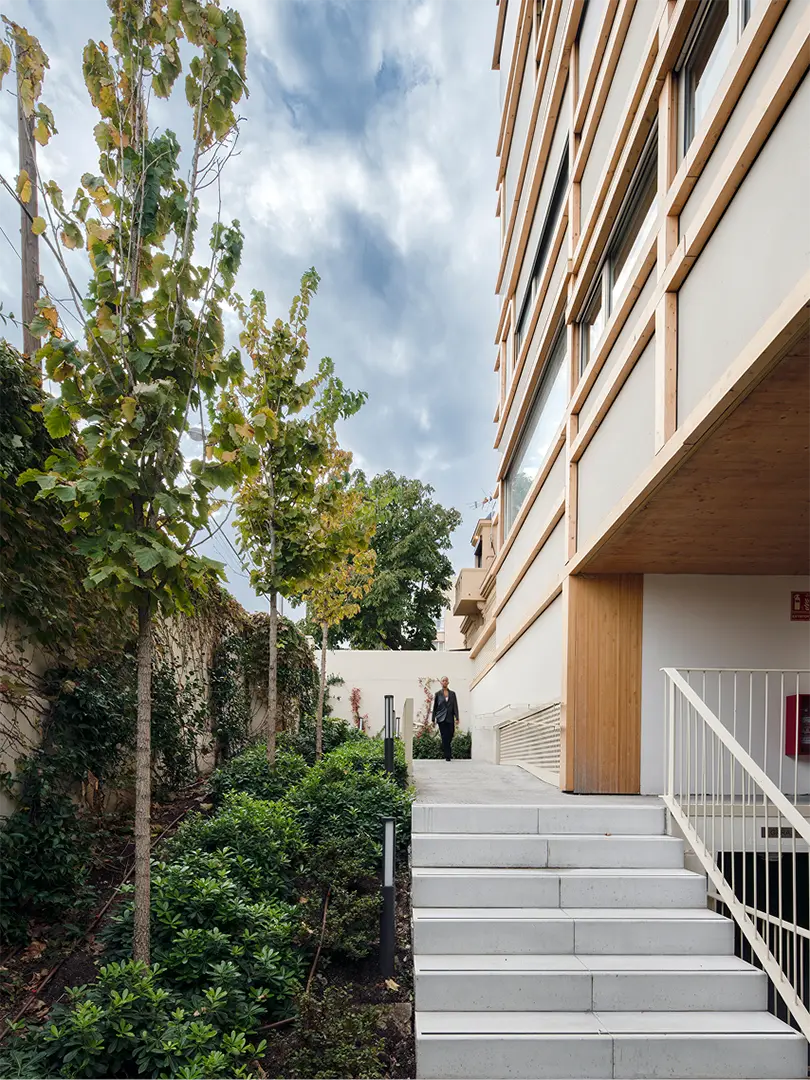
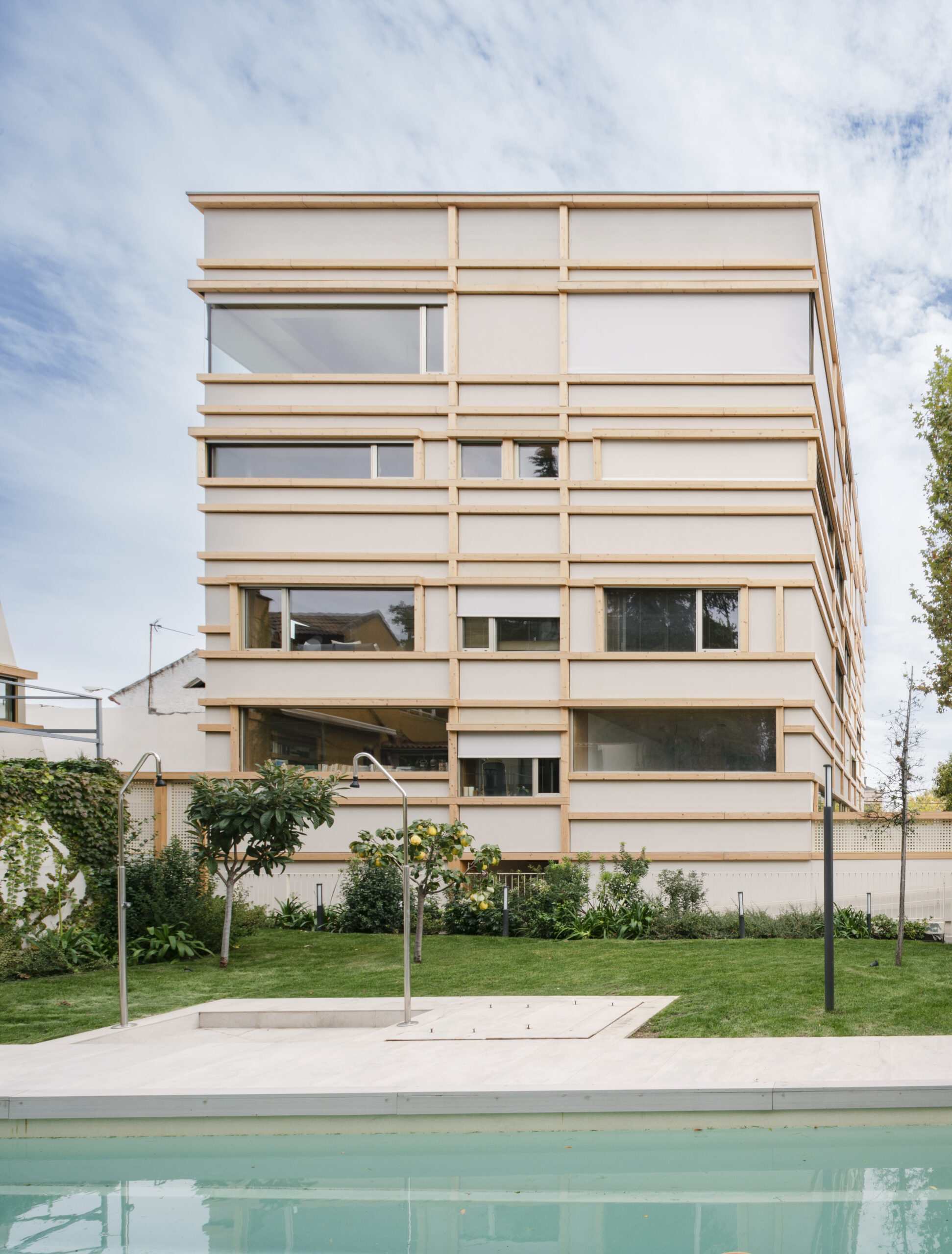
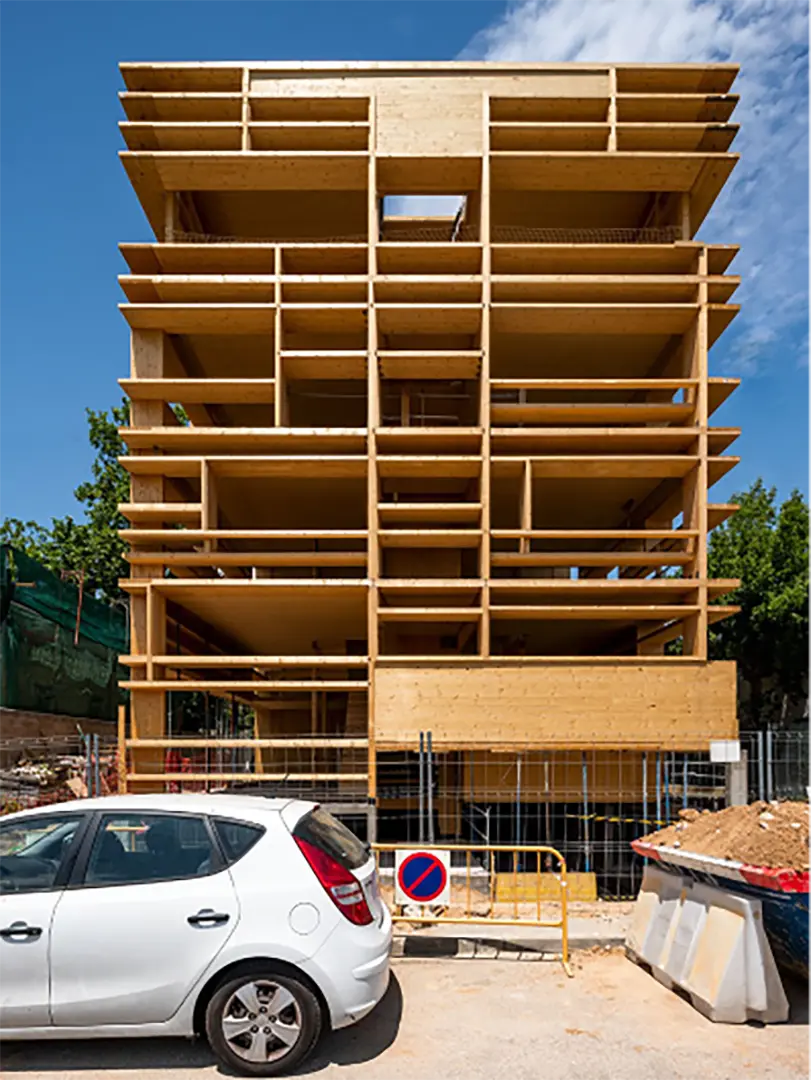
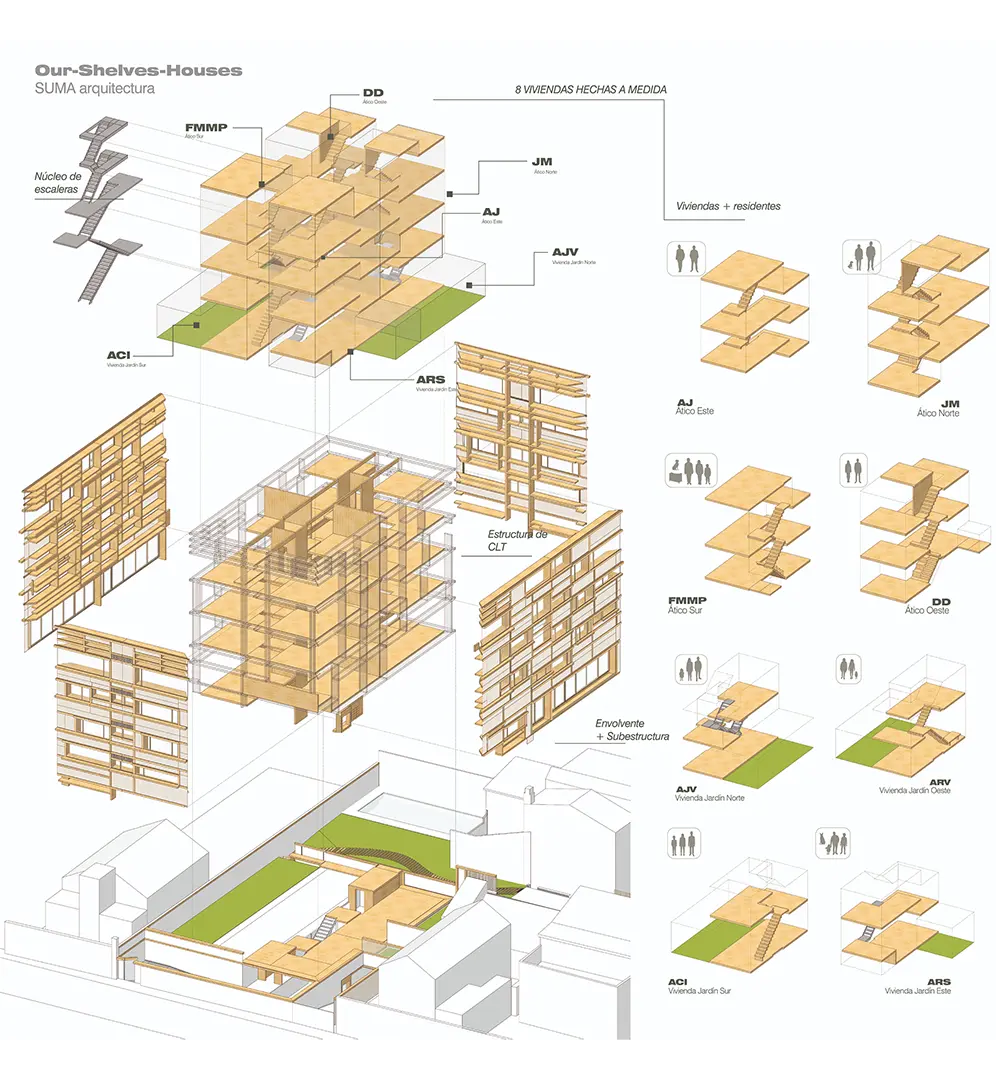
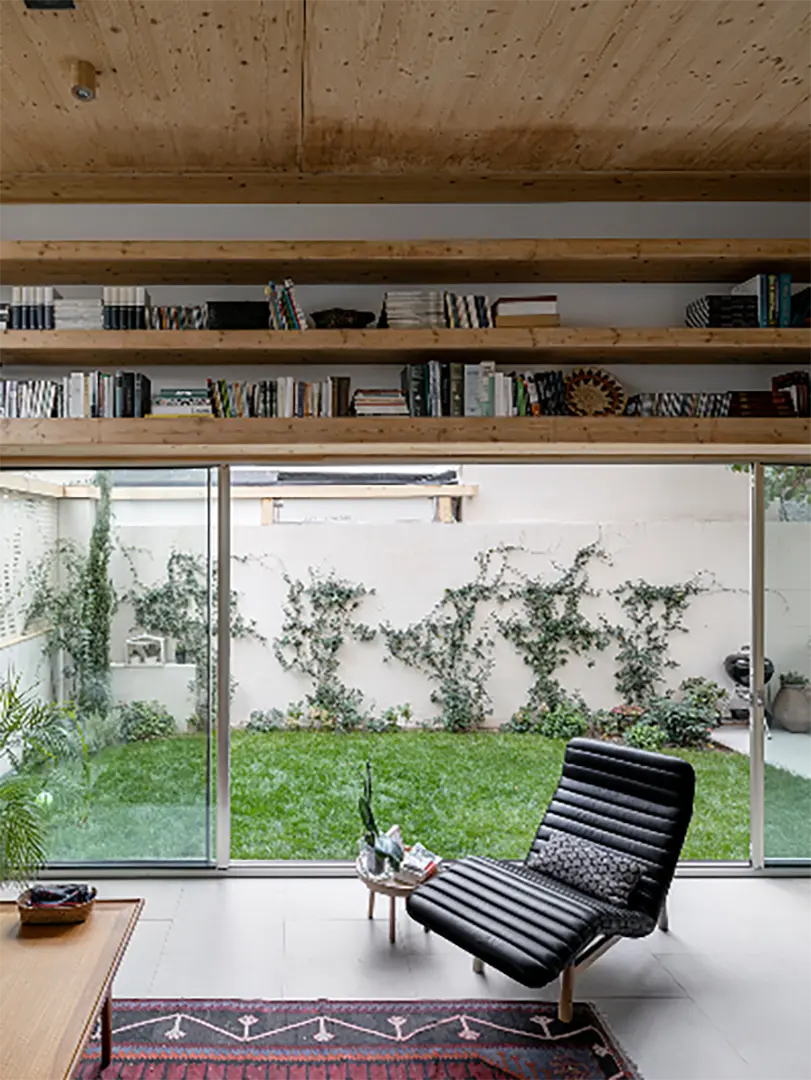
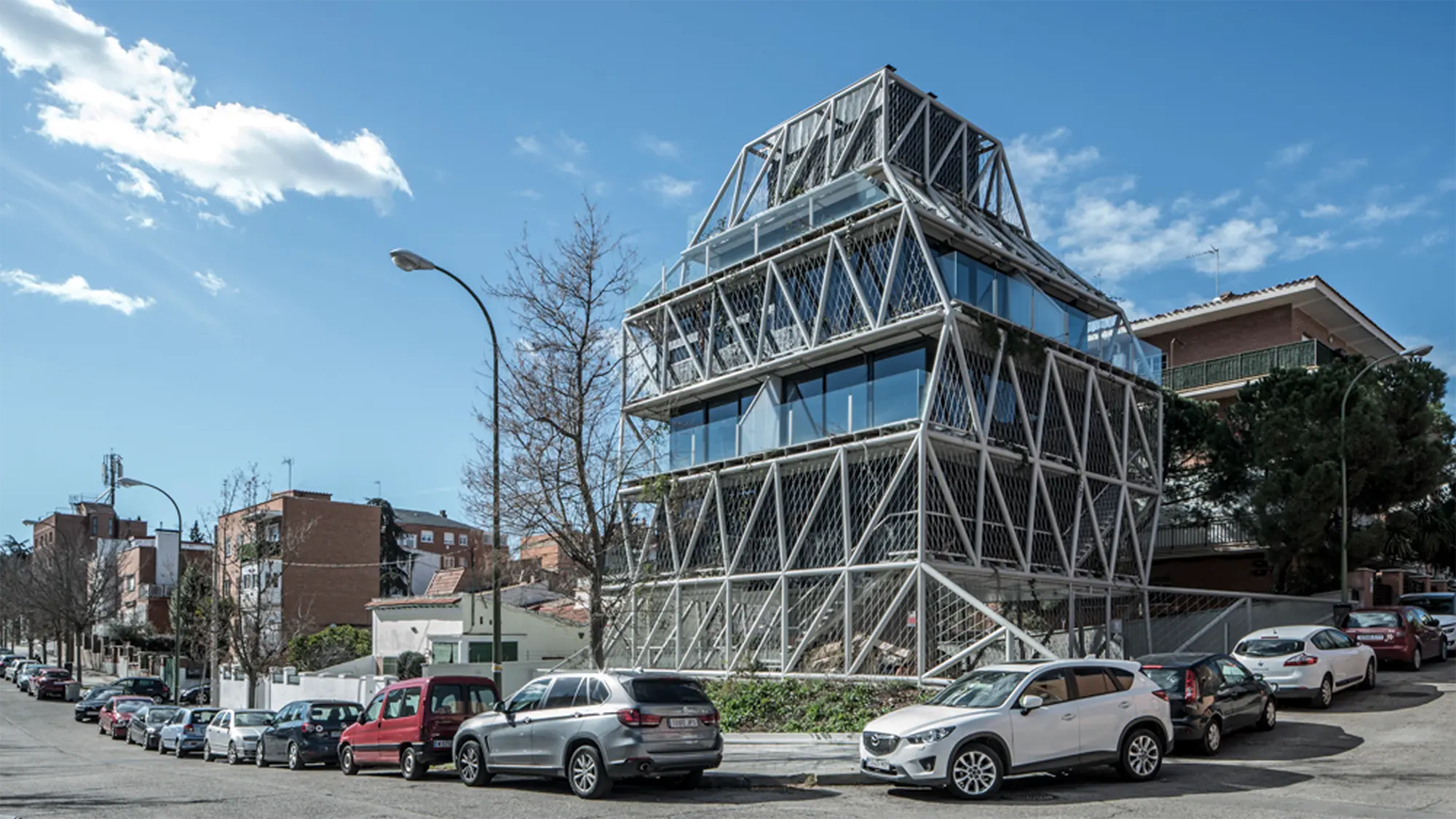
The building recovers the historic layout of Ciudad Lineal through a landscaped perimeter. The open block sits centrally on the plot, freeing up a community garden at the rear, shielded from urban noise, and is slightly elevated to allow circulation beneath via a porch. Each unit features private gardens on the sides.

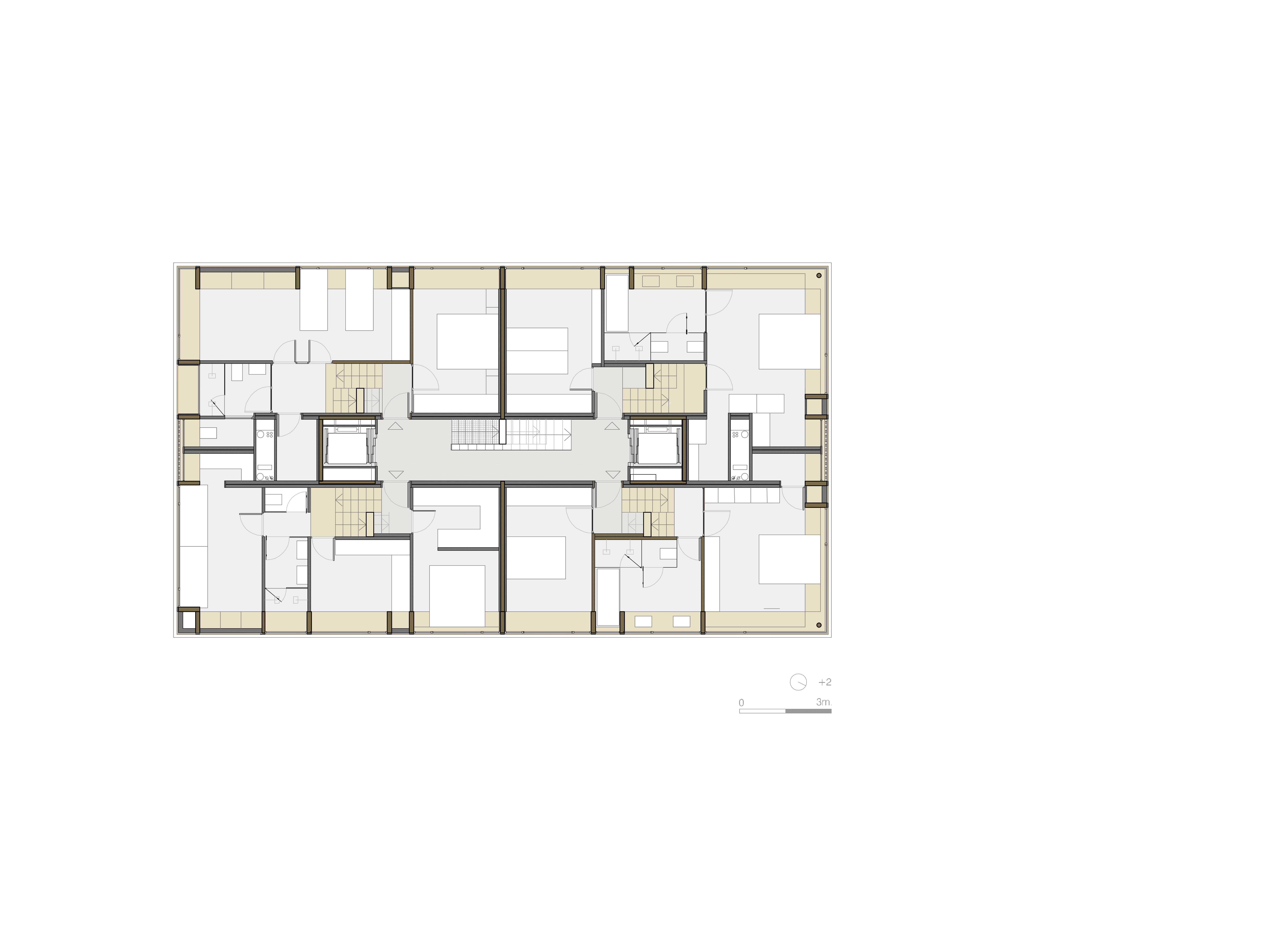
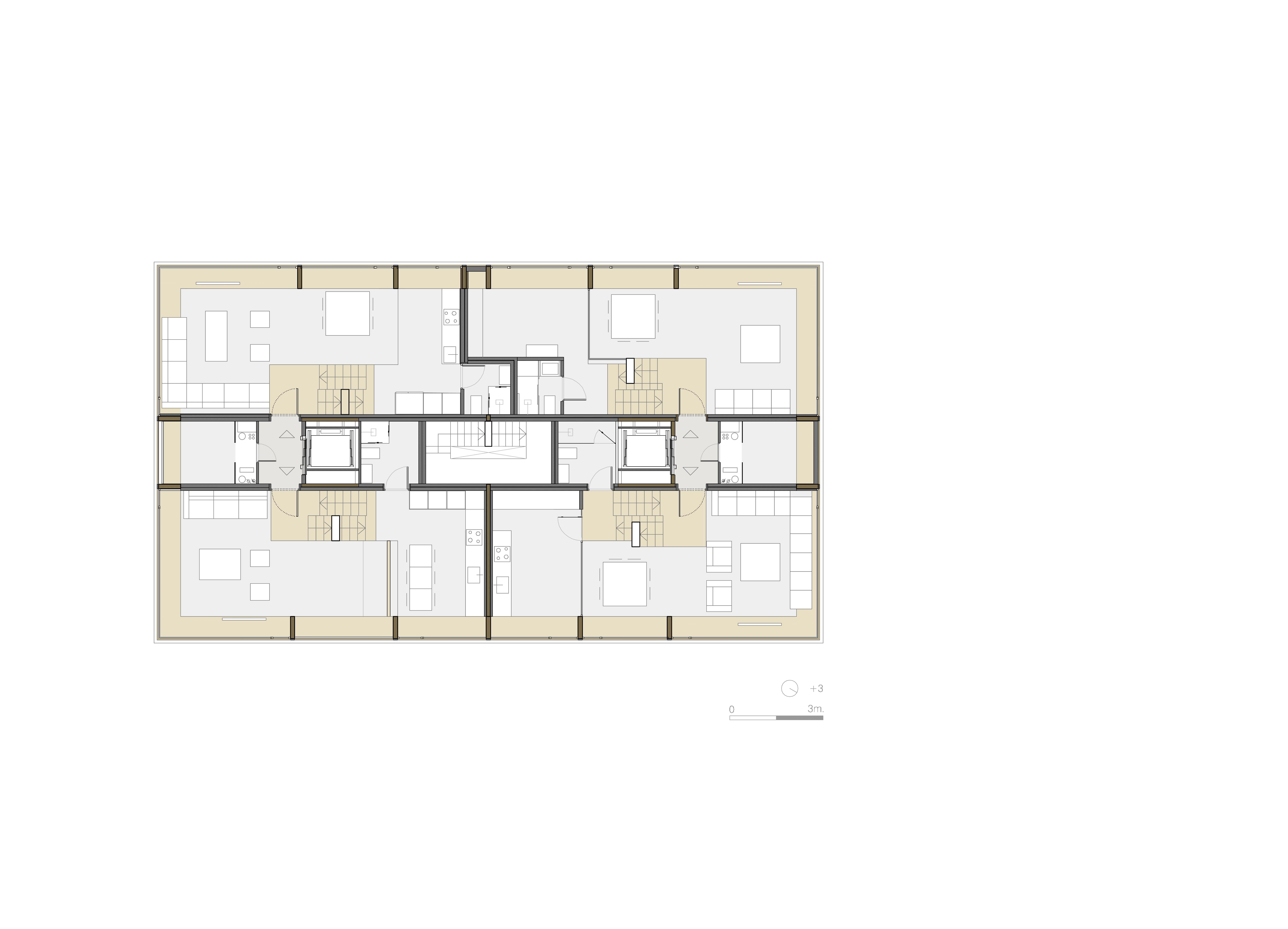
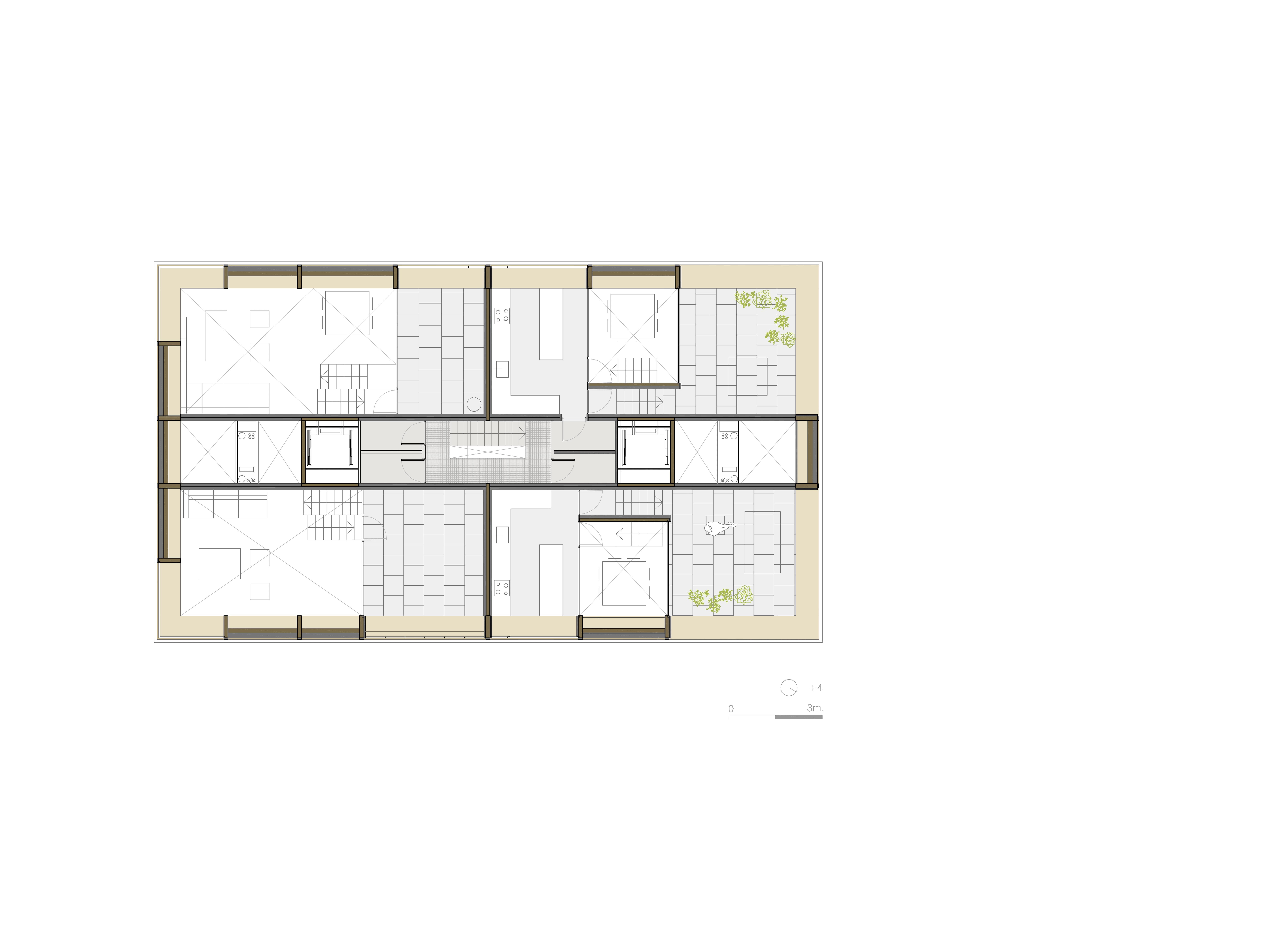
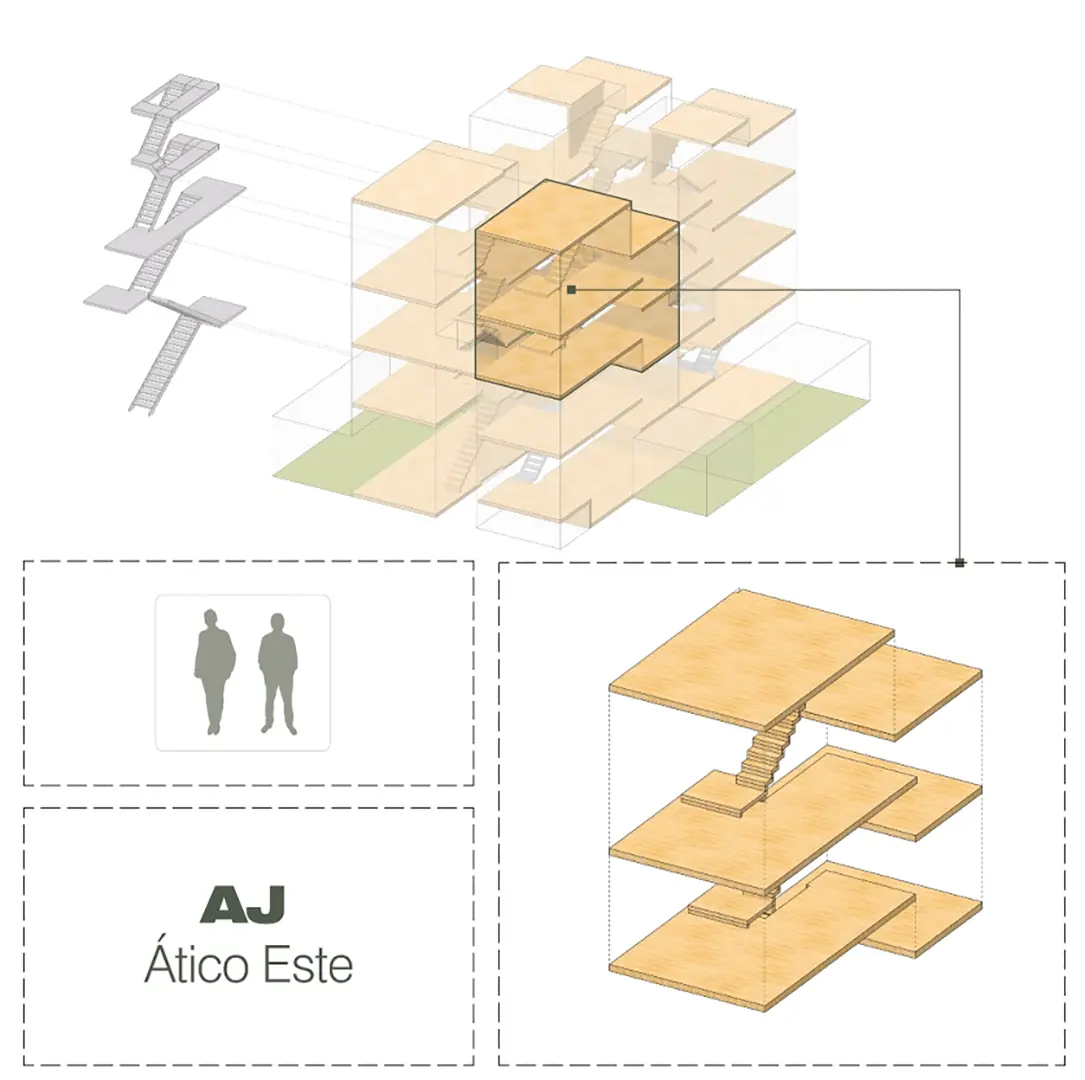
Instead of conventional apartment floors, the building is organized into duplex units: ground-floor homes with gardens and upper-floor penthouses with terraces.
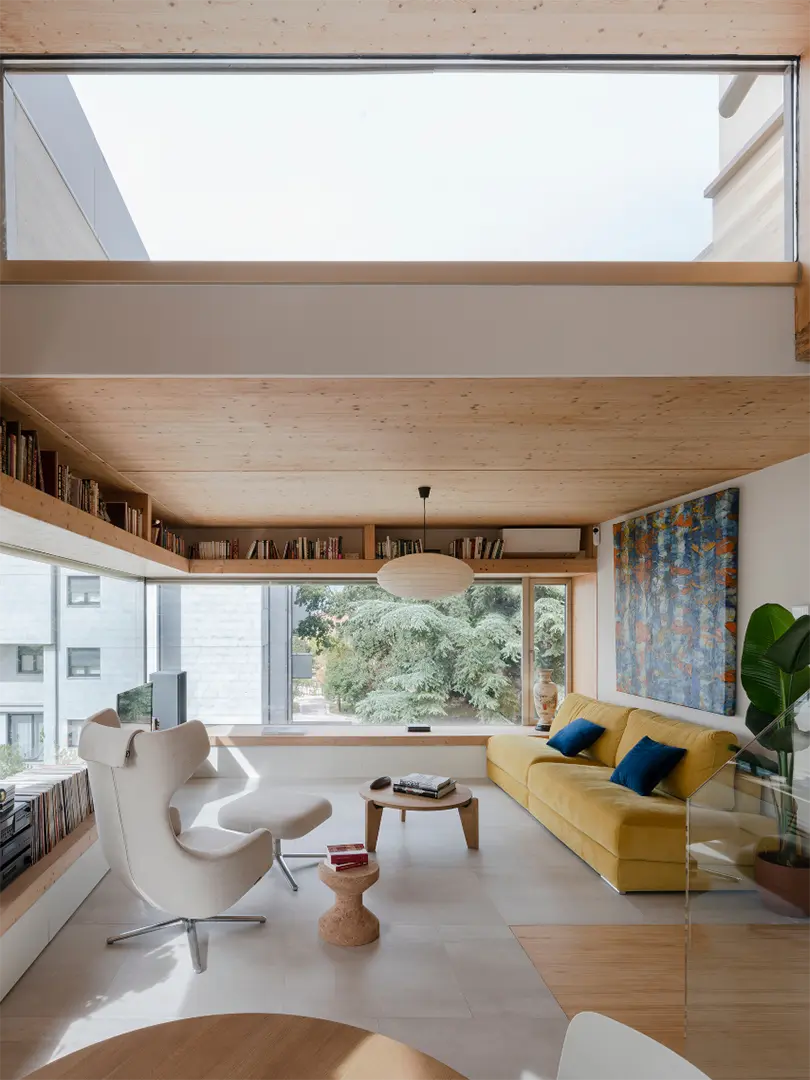
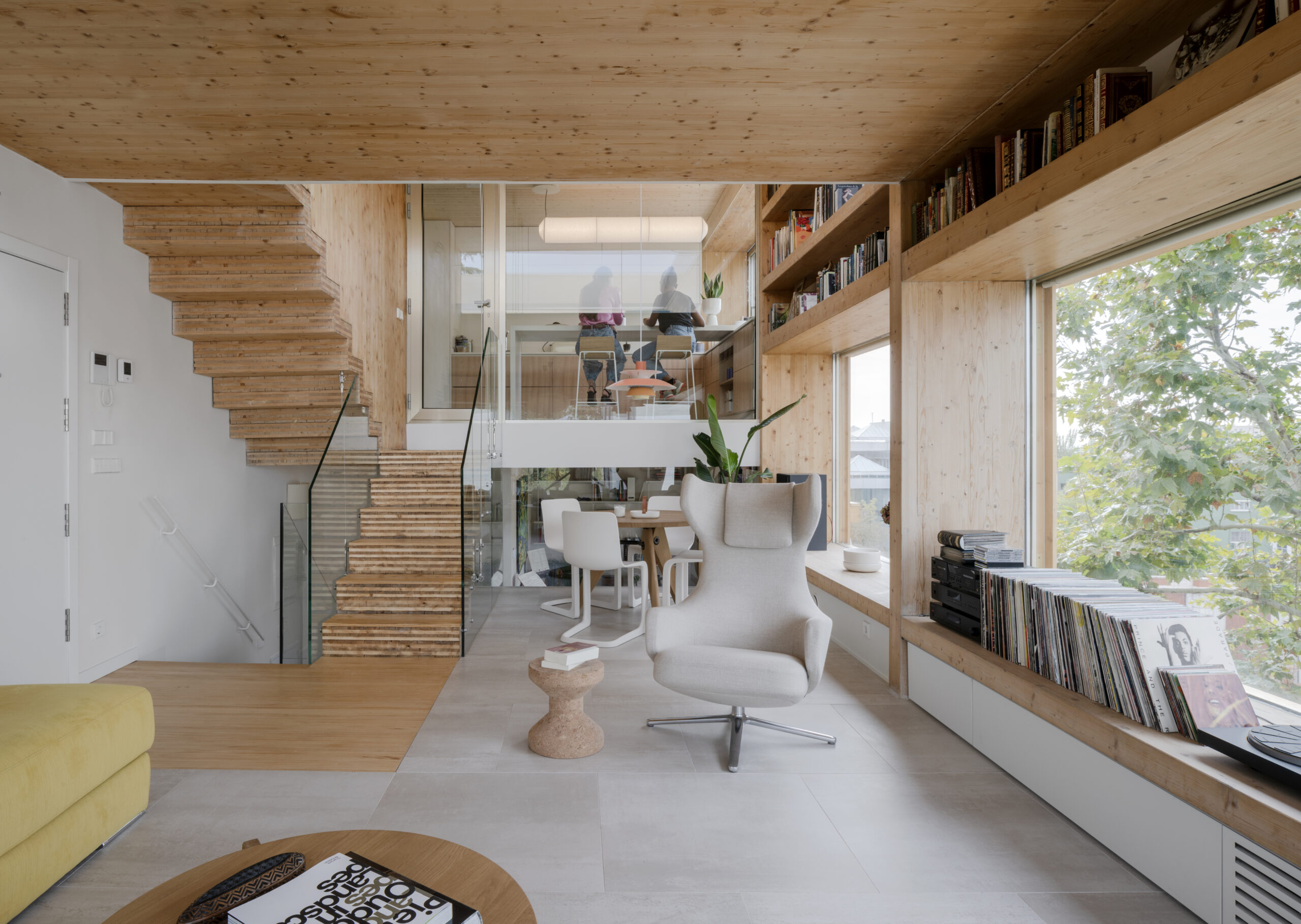
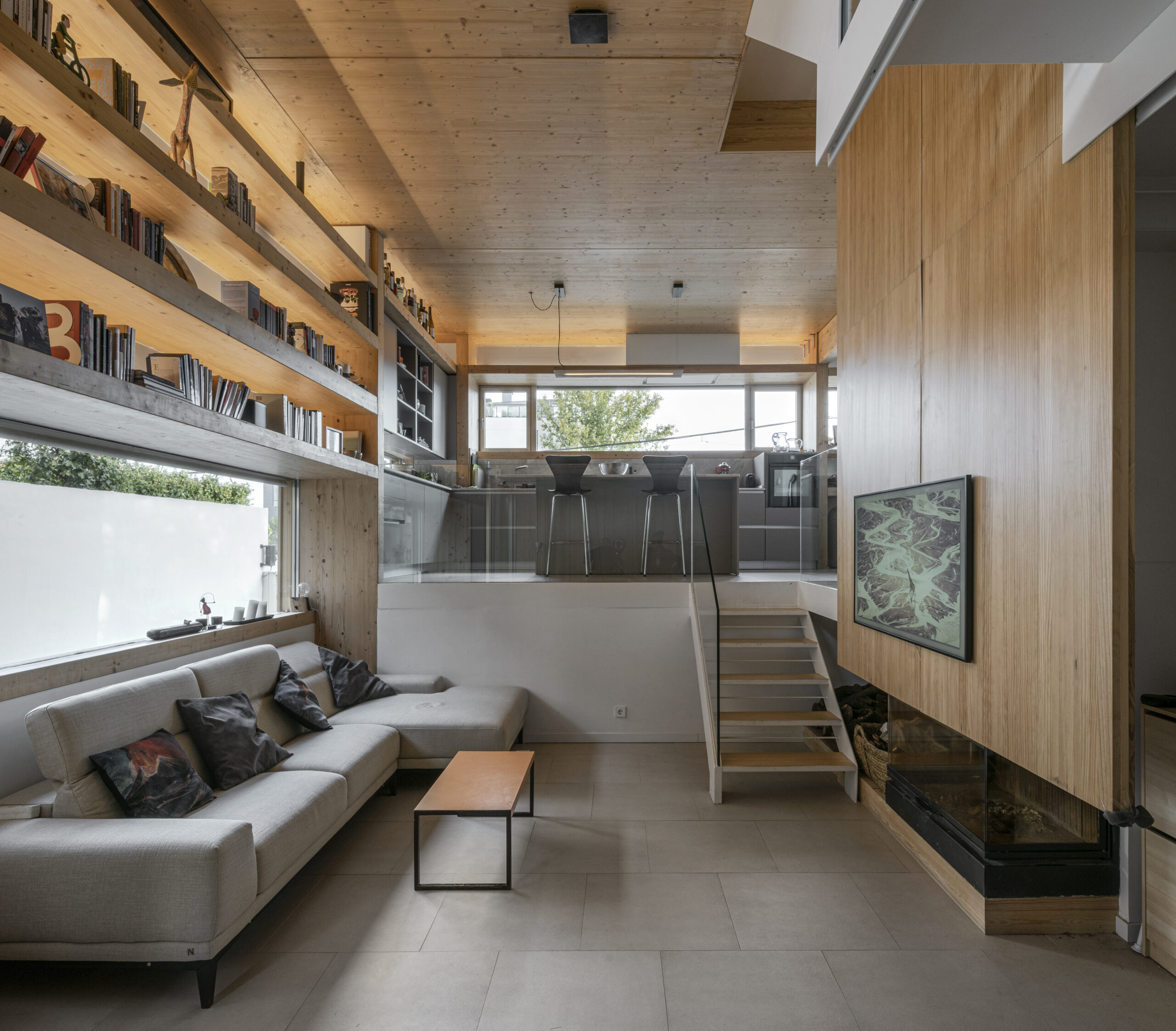
The stepped organization connects interior and exterior, grants greater height to the living rooms, turns the central staircase into a spatial distributor, and transforms each home into a lived-in landscape.
Architects as Developers: Tailored Program, Management, and Design
The project was initiated and managed by SUMA, bringing together 8 families of friends and young professionals in search of their first home.
Each of the 8 duplex dwellings includes 3 bedrooms and a private outdoor space: either a garden or terrace.
The complex also includes a pool, garden, parking, and shared services such as storage rooms, a laundry area, and common spaces for meetings or play.
Thanks to an intensive, tailor-made design process—including interviews and multiple design iterations—each cooperative member achieved a fully personalized home, with decision-making power far beyond choosing predefined finishes.
Socializing Structure
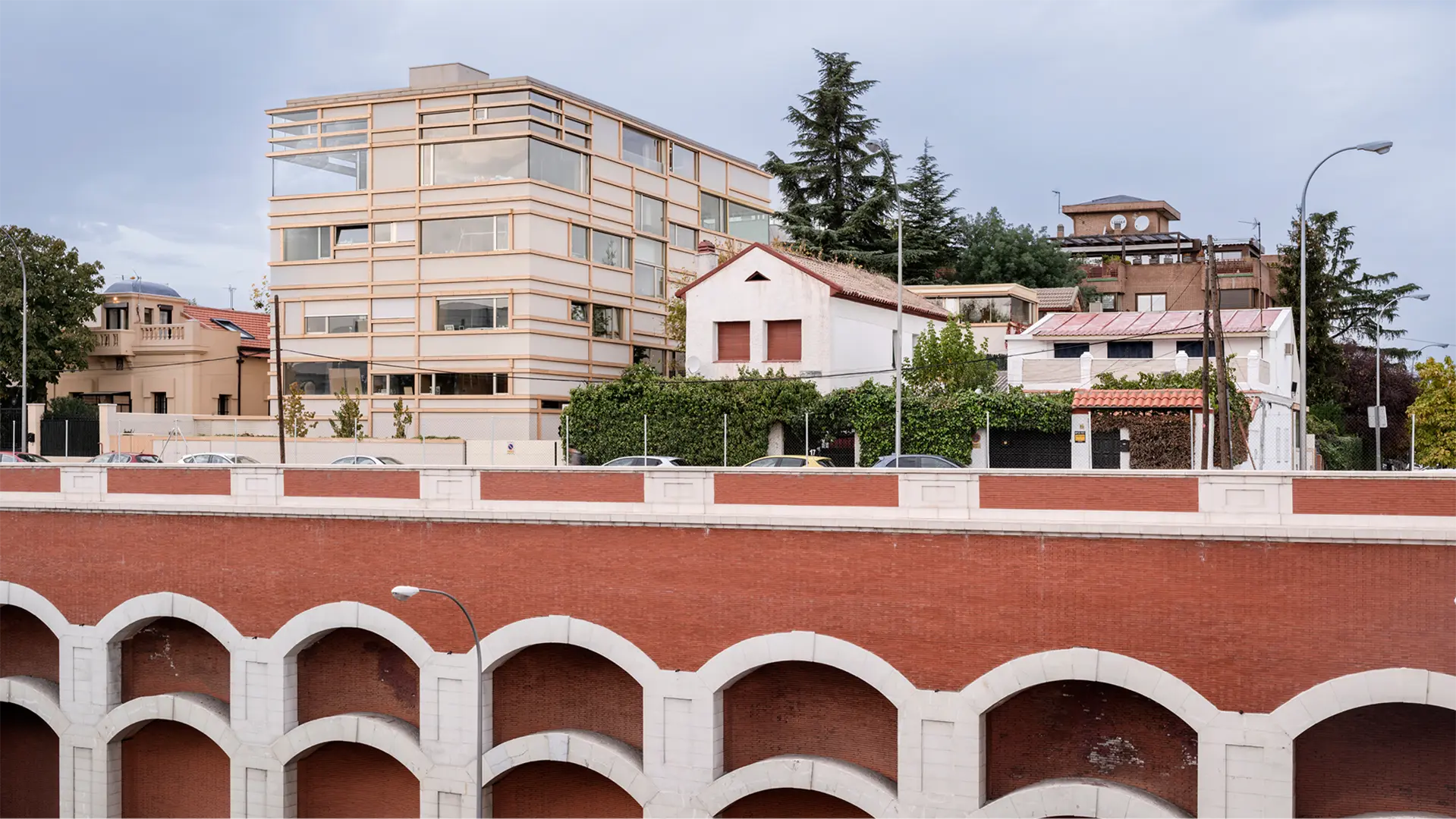
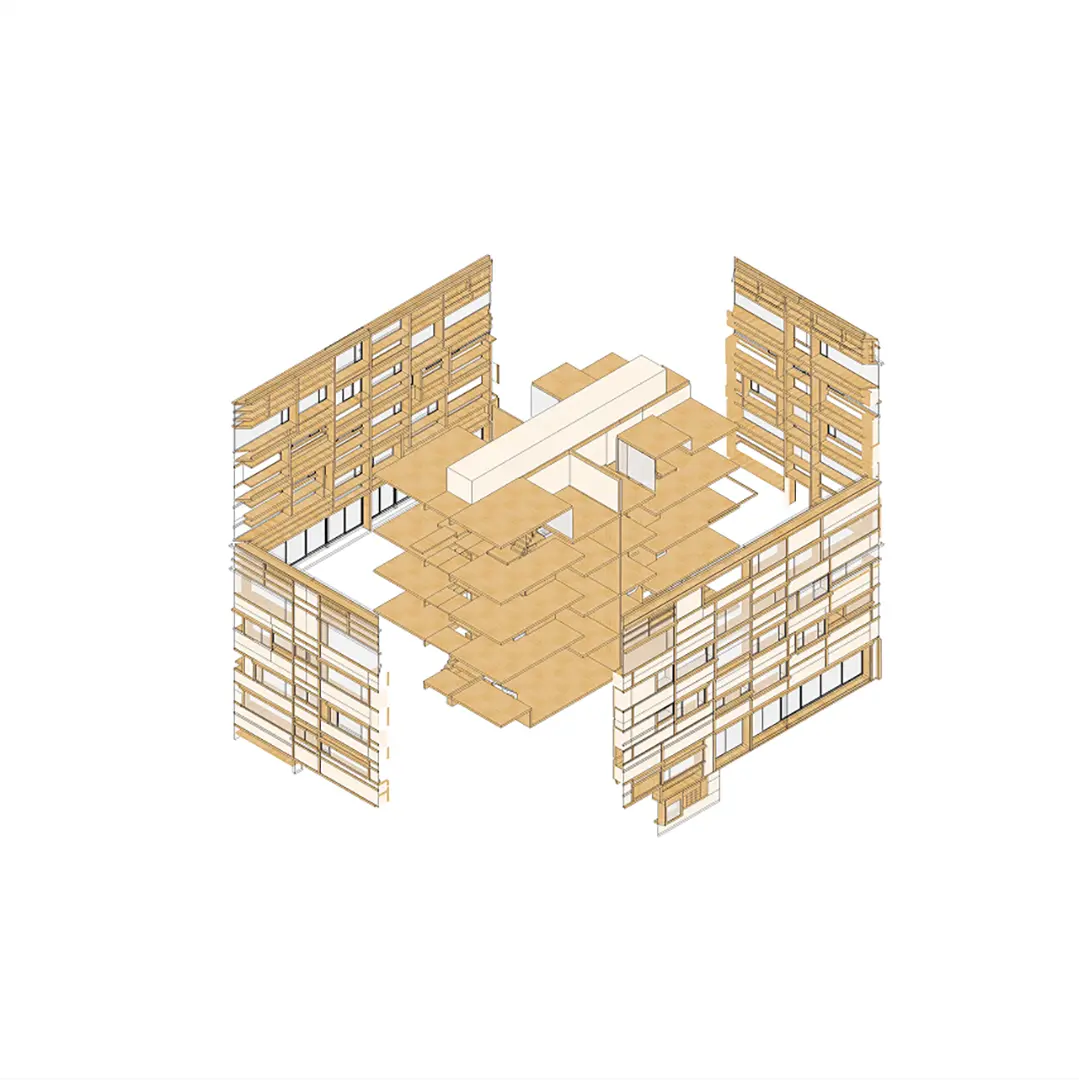
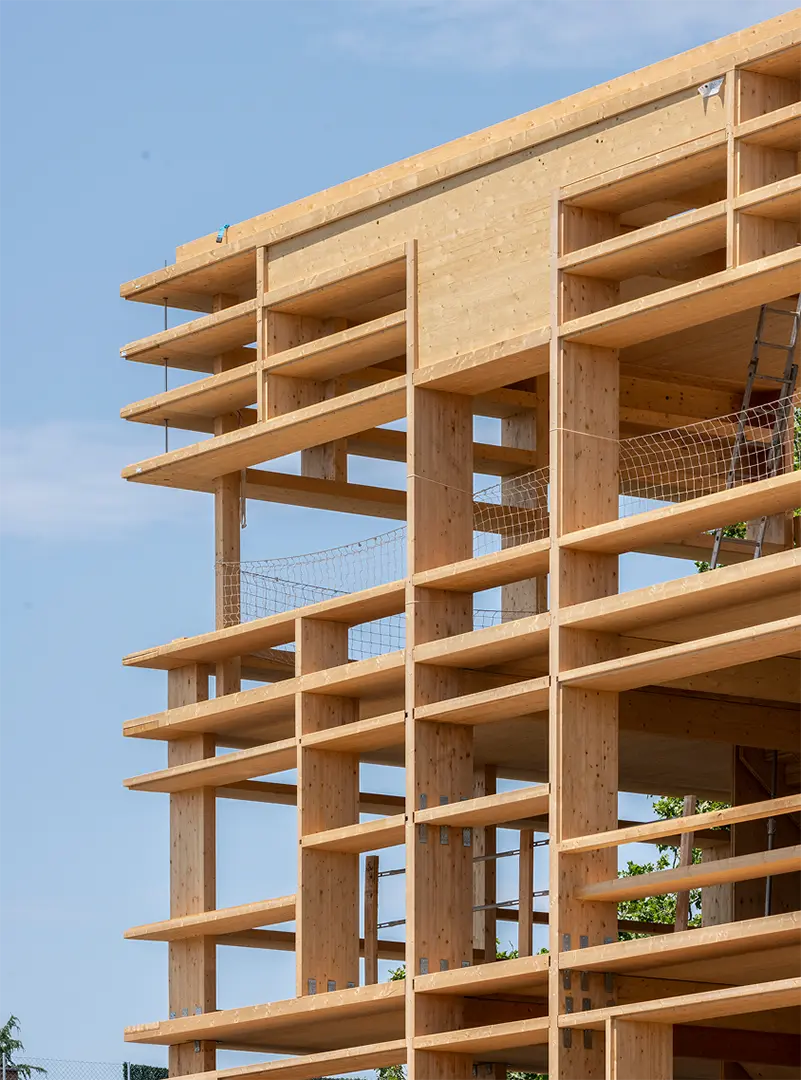
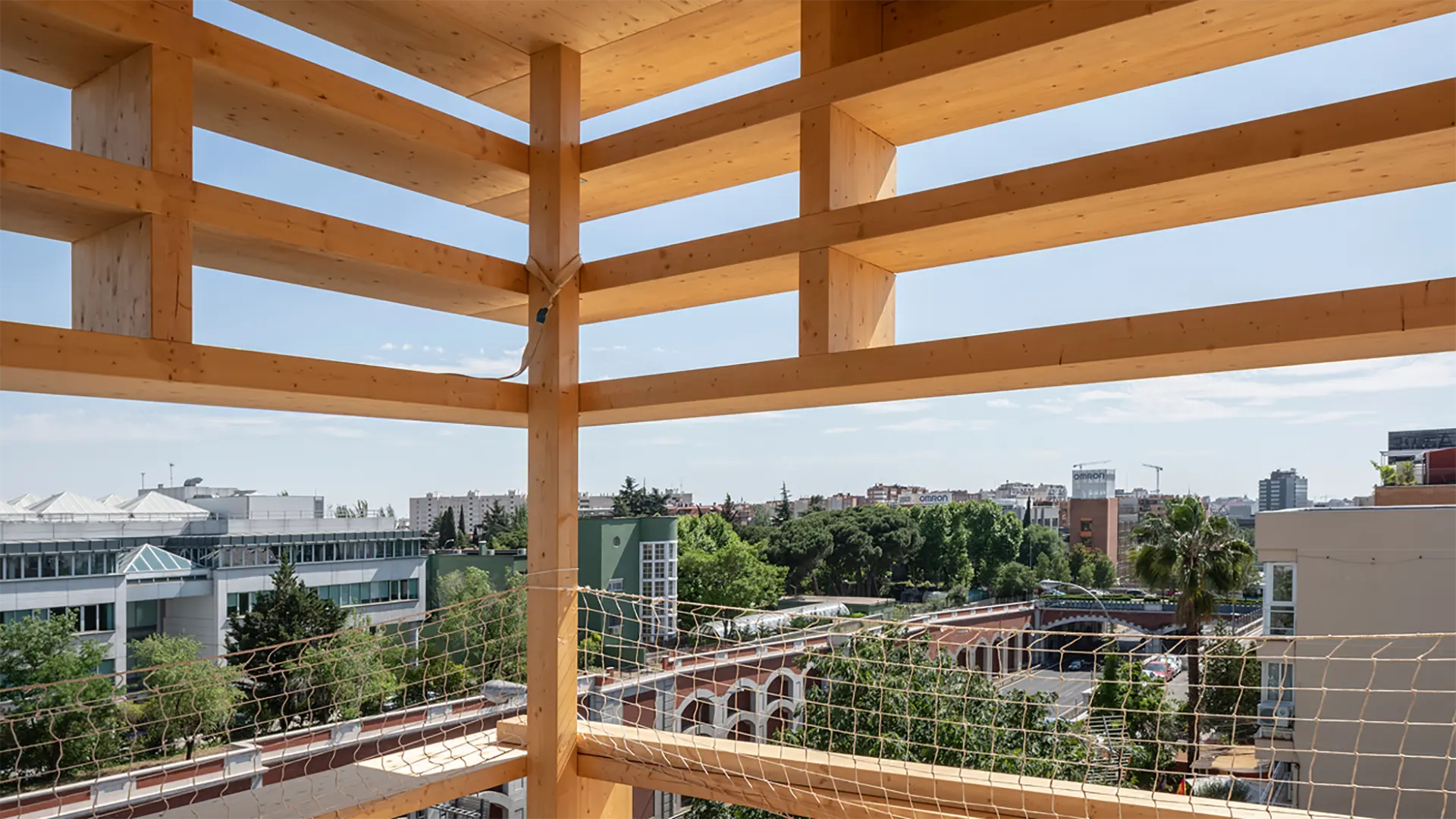
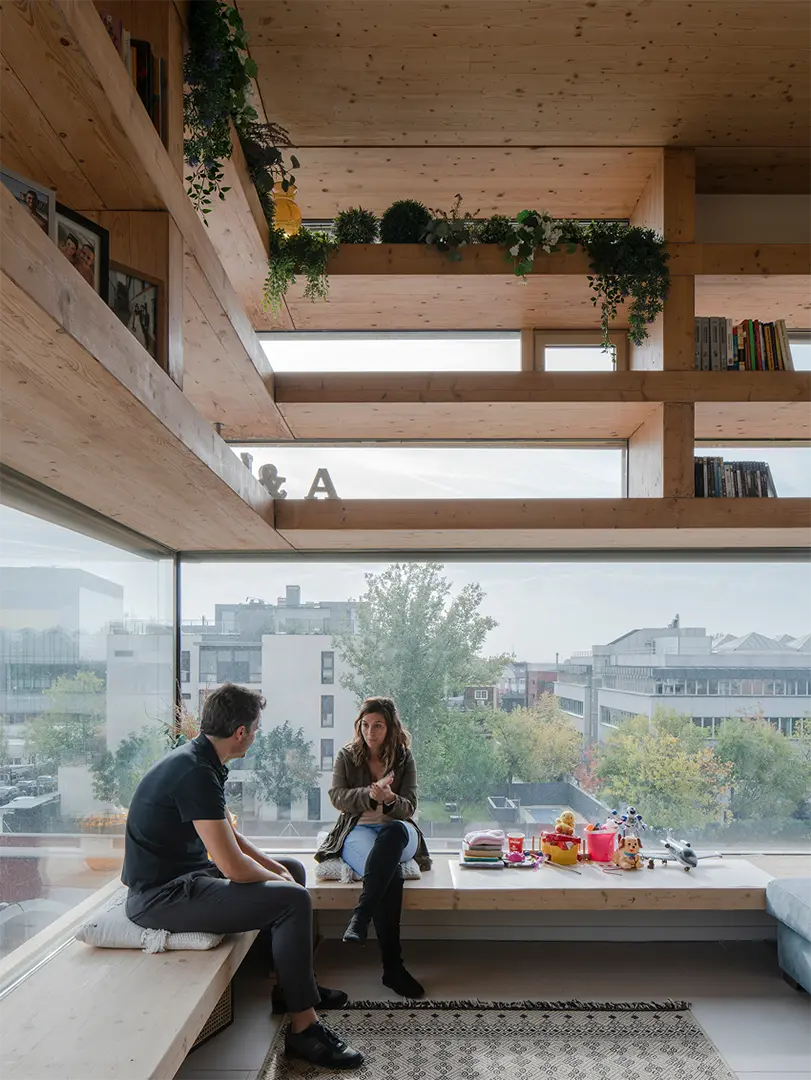
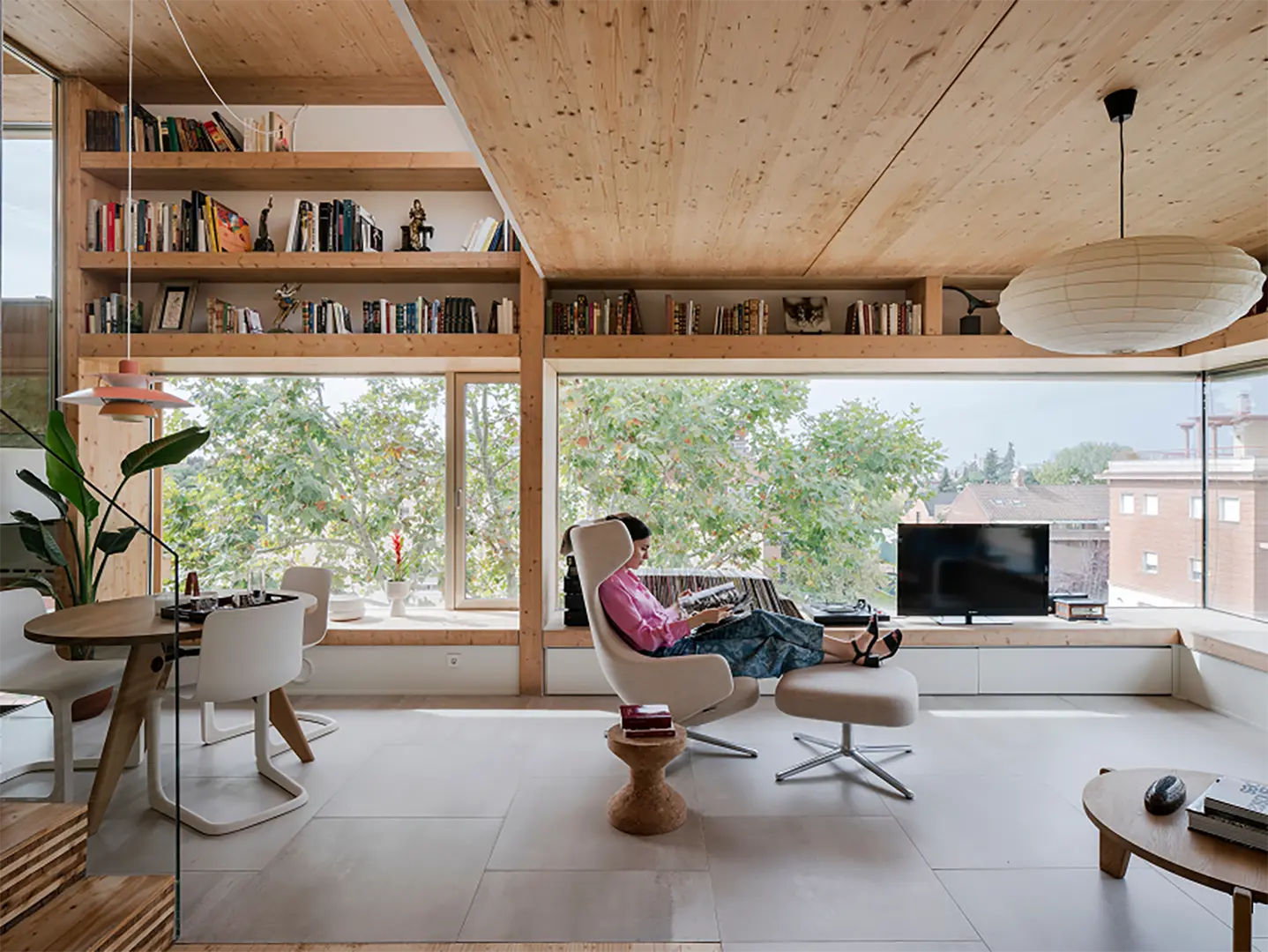
The structural envelope acts as a dense, customizable matrix that integrates the load-bearing system with built-in furniture: wardrobes, desks, bookcases, countertops, and elements that regulate privacy and light.
This matrix forms an ecosystemic structure, articulating multiple functions, load-bearing, habitability, thermal comfort, and storage in an integrated way that dialogues with both the built and natural environments.
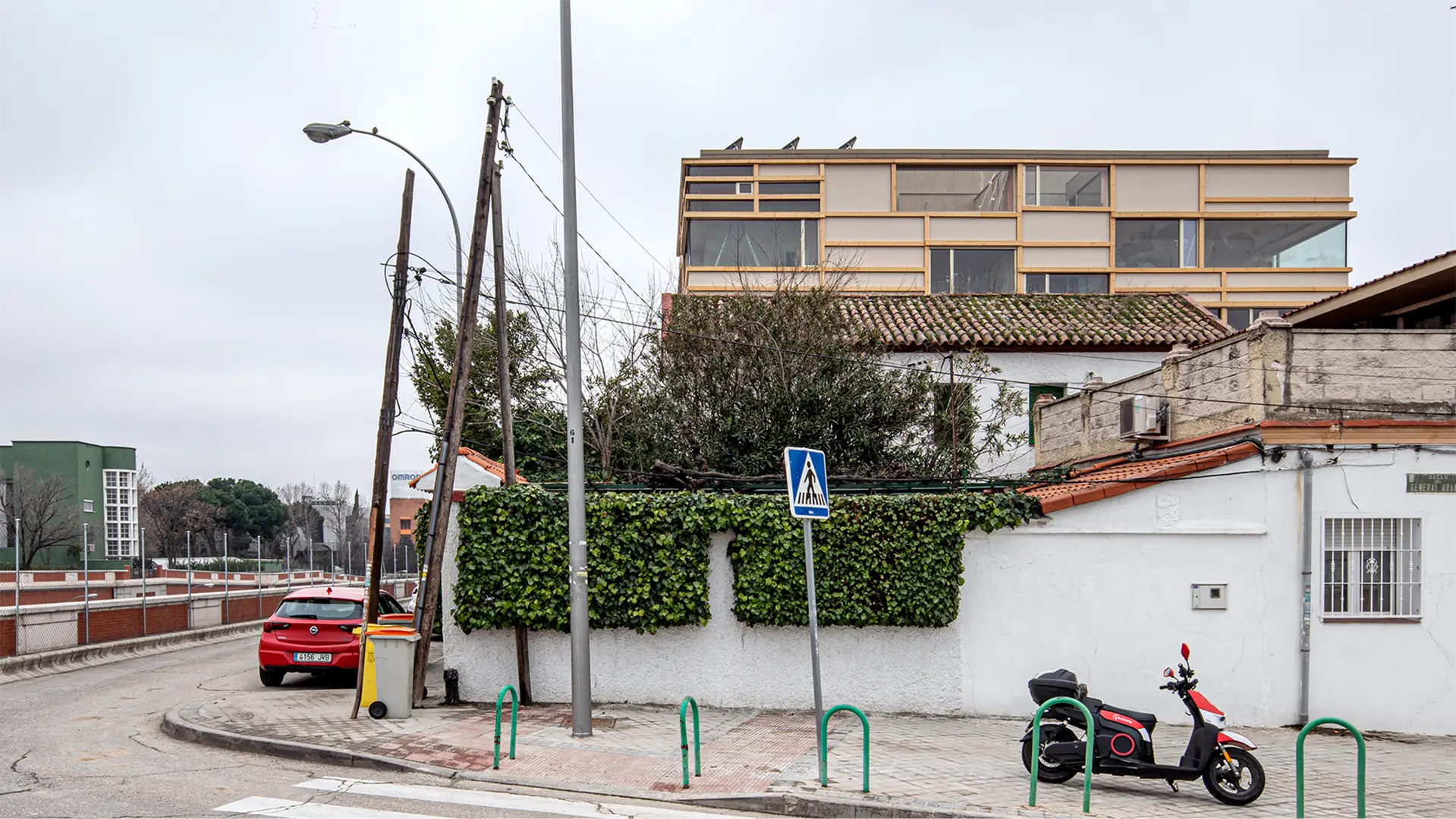
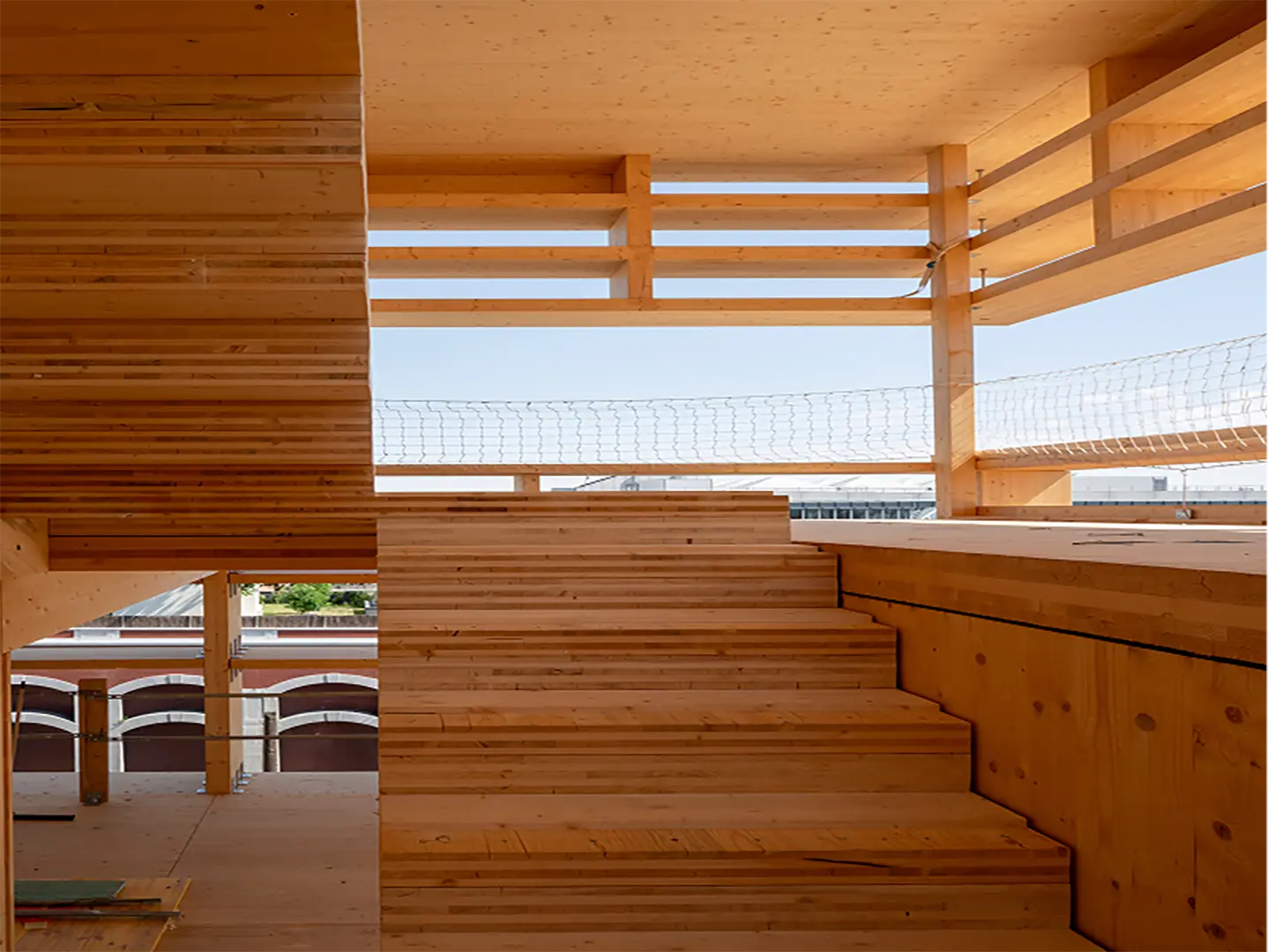
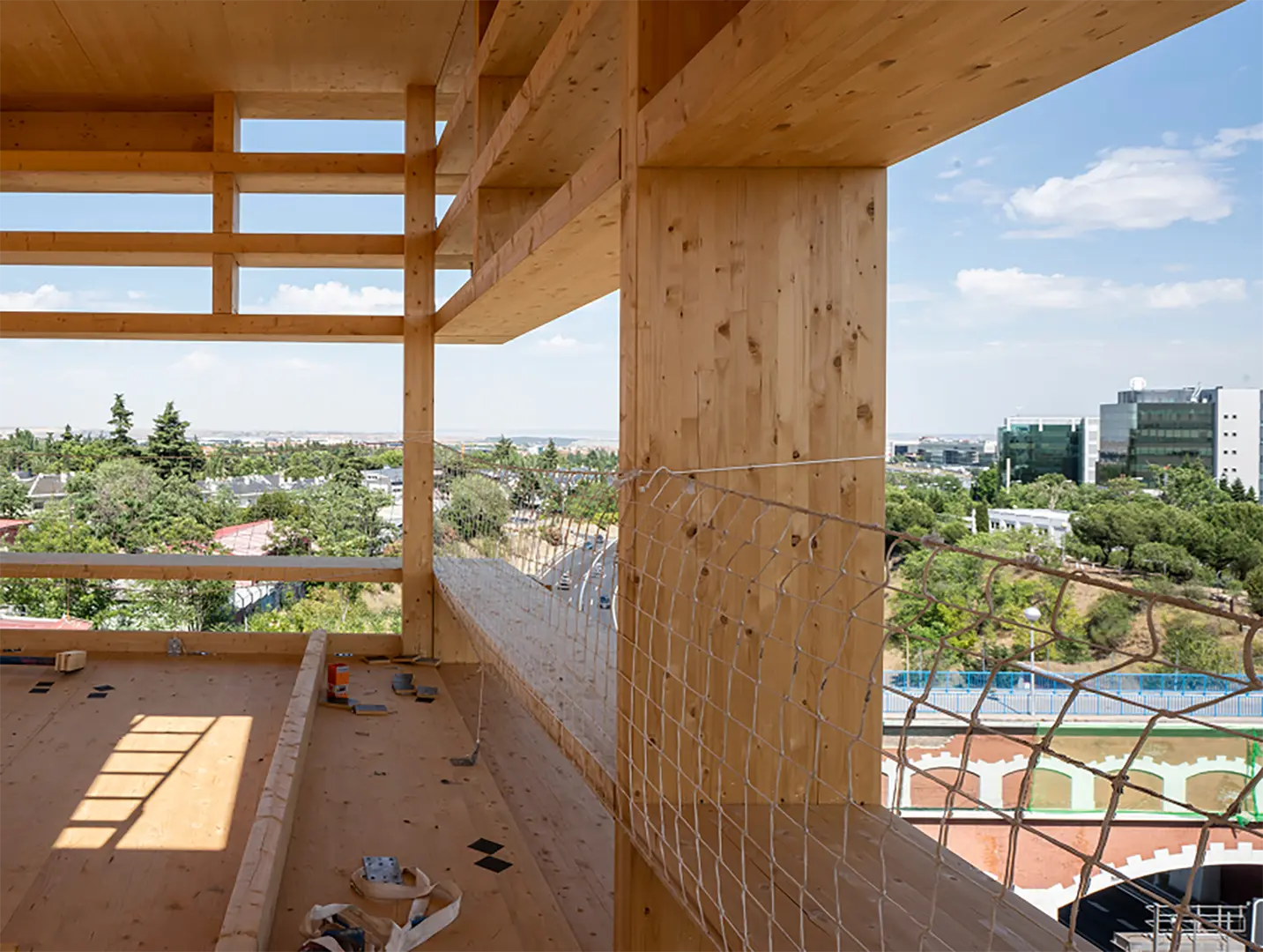
The structure is made of glued-laminated timber (GLT) and cross-laminated timber (CLT) from red fir and Scots pine, combining walls, slabs, and a robust facade frame resting on reinforced concrete basements.
Exposed wood offers sustainable benefits, improves hygrothermal conditions, facilitates construction efficiency, and brings warmth and empathy to the living space.
Energy Efficiency – Class A
The building integrates aerothermal systems for heating and cooling, mechanical ventilation with heat recovery, and sustainable strategies such as rainwater harvesting and solar thermal panels combined with shading awnings.
Altogether, these measures ensure high-efficiency thermal comfort and an Energy Performance Rating of Class A.
Building Social Bonds
After an extensive cooperative process, each home reflects its owners’ preferences and identity, resulting in custom-made dwellings.
At OUR-SHELVES-HOUSES, each family has built the best possible version of their home, reinforcing social ties and a sense of belonging.